 Search
 Account
 Discord

Hearthstone Protoss Mage Introduction

The Hearthstone Protoss Mage deck is an exciting and relatively new archetype in Hearthstone that offers a unique and highly enjoyable playstyle, blending powerful minion threats with spell synergy. At its core, the deck revolves around using Protoss spells to empower the minion Colossus, allowing it to deal massive damage and potentially end the game in a single turn. Through careful spell management and timing, players can reduce Colossus’ high mana cost, enabling them to play it at the most opportune moment and unleash its devastating effects on the board.
Beyond Colossus, the Hearthstone Protoss Mage deck also integrates the Imbue mechanic, which introduces an extra layer of strategy and adaptability. Imbue cards offer various ways to build power, from enhancing the hero power for additional damage or board control, to summoning valuable minions that trigger impactful effects. This mechanic allows players to set up powerful synergies and create opportunities for explosive plays throughout the game.
Whether you’re focusing on the sheer power of Colossus to close out games or exploring the deeper, more intricate possibilities offered by Imbue, Hearthstone Protoss Mage provides a unique and versatile approach to deck-building. This combination of classic spellcasting gameplay and innovative mechanics ensures that Hearthstone Protoss Mage remains both rewarding and adaptable, allowing players to create dynamic game plans and explore new strategic depths in Hearthstone.
Hearthstone Protoss Mage Win Condition

The primary win condition of Hearthstone Protoss Mage revolves around the powerful minion Colossus. By casting Protoss spells throughout the game, you can significantly increase the damage Colossus deals when it’s played, turning it into a game-changing threat. A core strategy of the deck is to reduce Colossus’ hefty 12-mana cost, making it easier to summon and allowing it to create a substantial impact on the board and your opponent’s health.
In versions that incorporate Imbue cards, cards like Asena and an empowered hero power offer significant late-game burst potential, serving as alternative or supplementary win conditions. This hybrid approach adds greater flexibility to the Hearthstone Protoss Mage deck, allowing it to adapt to various matchups while maintaining consistent pressure. Whether relying on the sheer power of Colossus or leveraging the synergy of Imbue mechanics, Hearthstone Protoss Mage can close out games in multiple ways. The ability to seamlessly transition between different strategies ensures that the deck remains versatile and capable of dealing with a wide range of opponents, making it a dynamic and adaptable choice in Hearthstone.
Hearthstone Protoss Mage Key Cards and Their Roles
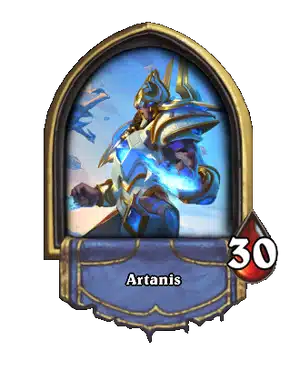
Colossus is the central win condition of the Hearthstone Protoss Mage deck, with its damage to all enemies increasing based on each Protoss spell cast throughout the game. Its Deathrattle triggers a secondary damage effect, which can be invaluable for clearing sticky boards. Artanis, a seven-mana hero card, summons two 3/4 Zealots with Charge and reduces the cost of Protoss minions by (2) for the remainder of the game. Artanis’ hero power, Twin Blades, allows you to attack a minion, and if it survives, it becomes harder to kill, making Artanis an essential card for long-term value, usually best played on turn seven for maximum impact.
Key Protoss spells include Reconnaissance Coil, which deals 5 damage and generates a random Protoss spell, and Chrono Boost, which offers card draw and helps cycle through your deck. Photon Cannon provides early-game control by dealing 2 damage and reducing Colossus’ cost when it kills a minion. Shield Battery grants armor and discounts the cost of Protoss spells, while Rewind helps discover extra copies of previously played Protoss spells.
Tide Pool Pupil has a repeatable effect to discover more Protoss spells, and Warp Gate also discounts Colossus. Void Ray, a low-cost Protoss minion, gains tempo when Artanis is played, allowing you to drop it for minimal mana. Other notable Protoss spells include SLE Skater for extra armor and Fizzle Snapshot, which can copy Colossus for powerful late-game plays, though it’s been nerfed to prevent multiple uses in one turn. Annihilation Commencing is another Protoss spell, contributing to board control.
For decks incorporating Imbue mechanics, cards like Bitter Bloom Knight, Spirit Gatherer, and Whisper Rider enhance the hero power, while Flutterwing Guardian and Divination provide additional synergy. Asena is a powerful late-game win condition in Imbue-focused decks, triggered when enough Wisps die. Neimal can replay Imbue cards or powerful minions for added value.
Other notable cards in the Hearthstone Protoss Mage deck include Miracle Salesman, which helps establish early board presence, and Marooned Ark Mage, offering strong neutral stats for added value. Greedy Partner provides useful card draw, though it can sometimes feel less impactful depending on the game’s pace. Youthful Brewmaster serves as a key utility card, allowing you to bounce Colossus back to your hand for repeated damage, especially in longer matchups.
Infinitize the Maxitude is another useful card, helping you discover additional Protoss spells and increasing consistency in extended games. Lastly, Arcane Artificer provides much-needed early armor, complementing the deck’s many spells and improving overall survivability. These cards help round out the deck’s synergy, allowing it to adapt and thrive in various game situations.
Hearthstone Protoss Mage Mulligan Guide
In the Hearthstone Protoss Mage deck, it’s crucial to prioritize low-cost cards in your opening hand to establish early-game tempo and survival. One-cost cards like Miracle Salesman are great to keep, providing early board presence and pressure. Deputy is another key two-cost card to hold onto, as it plays a vital role in board control and maintaining pressure. Most Protoss cards, with the exception of Colossus and Artanis, are solid keeps in your starting hand, as they contribute to building momentum and setting up for the later stages of the game. Keeping these cards ensures you’re able to start strong and smoothly transition into the powerful late-game synergies that define the deck.
Shield Battery is a strong keep for early armor gain and to reduce the cost of your Protoss spells, offering valuable survivability. Chrono Boost is another important card to keep, as it enables you to cycle through your deck quickly and helps you find more Protoss cards. Reconnaissance Coil is also worth keeping since it provides removal and generates another Protoss spell, further enabling your strategy. Arcane Artificer is useful for early armor and helps you survive against aggressive decks.
For Imbue-focused versions of the deck, cheap Imbue cards like Bitter Bloom Knight and Spirit Gatherer are top priorities, as they empower your hero power early and can snowball into bigger plays. Tide Pool Pupil is another good keep to start generating removal or additional Protoss spells. When facing aggressive decks, prioritize keeping early-game minions and cards that provide armor gain to help contest the board and survive their initial onslaught. Keeping these cards ensures you can maintain control and execute your long-term strategy effectively.
Hearthstone Protoss Mage Gameplay Strategy and Tips
The primary goal of the Hearthstone Protoss Mage deck is to play Protoss spells as frequently as possible to increase the damage of Colossus and reduce its mana cost. Cards like Chrono Boost and Greedy Partner are essential for card draw, helping you find key cards, especially additional Protoss spells that fuel Colossus.
For early to mid-game board control, utilize removal tools like Reconnaissance Coil and Photon Cannon. Photon Cannon can deal damage to minions or go face, but it’s typically better used to clear enemy minions, which helps discount Colossus. Armor gain cards such as Shield Battery and SLE Skater are important for surviving against aggressive decks, allowing you to reach the late game where Colossus can make a significant impact.
Be mindful of your hand size, especially when drawing multiple cards from effects like Chrono Boost, to avoid overdrawing. In longer, more controlling matchups, aim for a potential One-Turn Kill (OTK) with a heavily buffed and discounted Colossus. For Imbue-focused versions of the deck, focus on playing Imbue minions early to empower your hero power, providing consistent chip damage or other game benefits. Artanis is best played on turn seven to maximize the Battlecry effect, summoning two Zealots with Charge and providing a permanent cost reduction for Protoss minions. Use the Zealots for board control or to push early face damage.
Youthful Brewmaster can be a useful tool to bounce Colossus back to your hand after playing it, allowing you to replay it for additional damage, especially in matchups against tanky classes. Be cautious against super aggressive decks if you don’t draw enough early-game interaction or armor gain to survive. In matchups against disruptive decks, such as those with Viper in Zerg Death Knight, which can steal your Colossus, having multiple copies of Colossus or alternative win conditions, like an empowered hero power in Imbue versions, is key to maintaining pressure.
Hearthstone Protoss Mage Strengths and Weaknesses

The Hearthstone Protoss Mage deck boasts several strengths, including the potential for massive late-game burst damage with a highly buffed Colossus, which can often deal 30 or more damage in a single turn. The deck has solid control tools through Protoss spells, providing removal and board interaction to manage threats. It also offers the ability to generate additional resources and spells through discover effects like Tide Pool Pupil and Primordial Glyph. The deck can adapt its playstyle, especially in hybrid versions, allowing you to lean into the Protoss or Imbue package based on your opening hand and the matchup. It generally fares well against slower, more controlling decks that don’t apply early pressure.
Despite its strengths, Hearthstone Protoss Mage has several notable weaknesses that can make certain matchups difficult. One of the most significant challenges comes from aggressive decks, which can quickly overwhelm you before you have the chance to stabilize and summon Colossus. Early pressure from these decks can force you to expend valuable resources on defense rather than setting up your win conditions.
Another issue arises when key cards like Colossus are drawn too early or too often, clogging your hand and slowing down your game plan. This can delay your ability to summon Colossus at the optimal time, giving your opponent more room to control the board and put pressure on you.
Matchups against decks with strong disruption, such as Death Knight’s Viper, which can steal your Colossus, are particularly challenging. Viper can completely thwart your primary win condition, forcing you to adapt your strategy or risk losing the game. Additionally, decks with significant armor gain can be problematic, as Colossus may need to be excessively buffed to break through their defenses.
Zerg Death Knight, in particular, is often considered a tough matchup, largely due to the disruption Viper brings. Likewise, Weapon Rogue can present a significant challenge due to their burst damage potential, requiring you to outheal or survive their aggressive onslaught. With these challenges in mind, it’s important to adjust your strategy, be mindful of potential disruptions, and rely on alternative win conditions when necessary.
Hearthstone Protoss Mage Variations and Tech Cards

Imbue Hearthstone Protoss Mage is a variation that combines the core Protoss package with Imbue cards, introducing a unique early-game strategy focused on empowering the hero power to deal additional damage and establish board presence. This version often includes cards like Bitter Bloom Knight, Spirit Gatherer, and Whisper Rider to support the Imbue mechanic. Some versions of the deck also include tech cards like Buy One Get One Freeze, which provides additional board control against aggressive strategies, although some builds may opt for different tech choices based on the meta. Additionally, certain deck lists may incorporate specific cards aimed at disrupting aggressive strategies or bolstering early-game survivability.
In terms of high-risk, high-reward potential, some lists experiment with Puzzle Box of Yogg-Saron for swing turns, though its inclusion is situational and can lead to unpredictable outcomes. There has also been mention of King Krush in a Hearthstone Protoss Mage hybrid deck that incorporates the Excavate Mage archetype, highlighting the potential for further deck experimentation, though this isn’t considered a standard Hearthstone Protoss Mage card. Lastly, some early versions of Hearthstone Protoss Mage experimented with “freeze” effects to stall for time, providing additional control over the board while setting up for late-game plays.
Hearthstone Protoss Mage Matchup Advice

Against aggressive decks, it’s essential to prioritize early removal to prevent them from gaining momentum. Spells like Reconnaissance Coil and Photon Cannon are crucial for controlling the board and removing threats. Photon Cannon not only helps clear minions but can also target face if needed. To survive the early onslaught, make sure to gain armor with cards like Shield Battery and Arcane Artificer. These cards provide much-needed durability, allowing you to withstand the aggressive pushes and stall until you can stabilize.
For control decks, your primary focus should be casting as many Protoss spells as possible to increase the damage of Colossus, which is your win condition. Timing is critical, as you need to set up a powerful late-game burst. Be patient, as it may take a few turns to cycle through your deck and find multiple copies of Colossus for maximum impact. The goal is to create an overwhelming presence on the board with a massive Colossus that can deal significant damage.
In matchups against Warrior, the strategy is to outvalue them with a heavily buffed Colossus, ideally before they can clear the board. However, be cautious of Warrior’s potential disruption tools like Brawl or Boom Boss, which could ruin your plans. Be ready to deal with their board clears by managing your resources wisely and ensuring that you can reload the board if needed. By maintaining control over the flow of the game, you can maximize the value of your Colossus and secure the win.
Zerg Death Knight can be a tough matchup due to the threat of Viper stealing your Colossus, so it’s important to apply early pressure and have multiple threats or alternative win conditions in play to avoid relying solely on Colossus. Against Weapon Rogue, focus on applying enough pressure early to force them to use their weapon for defense. Prepare for a fast Colossus turn to outheal their damage and gain board control, ensuring you can stabilize before their burst potential becomes overwhelming.
Freeze effects can be considered in this matchup if it becomes problematic. Priests typically present a favorable matchup since they lack the early aggression to pressure you down before Colossus becomes a threat. Demon Hunter, especially the aggressive variants, can quickly overwhelm you, making it a challenging matchup, with Armored Demon Hunter being a particularly bad matchup. Finally, while Shaman can also present a difficult matchup, details on the specifics are less covered.
This guide provides a solid foundation for playing Hearthstone Protoss Mage, highlighting key strategies and card synergies. As the Hearthstone meta constantly evolves, it’s crucial to adapt your deck and gameplay to counter popular strategies and stay competitive. Be prepared to adjust your card choices based on the decks you encounter on the ladder, as this will maximize your chances of success. With practice, you’ll become more familiar with the deck’s nuances, optimal play patterns, and how to make the most of its powerful combo potential. Whether you focus on Colossus’ massive damage or lean into the flexibility of Imbue cards, mastering Hearthstone Protoss Mage offers a dynamic and rewarding experience for any player.
