 Search
 Account
 Discord

Once Human Sulfur: Introduction

In Once Human, sulfur isn’t just another shiny mineral—it’s the lifeblood of explosive crafting and advanced ammo production. Whether you’re the kind of player who hoards bullets like a dragon hoards gold or someone who just wants to see things go boom, sulfur is essential. This isn’t the pale-yellow, chalky powder you remember from chemistry class. Here, it’s a game-changing material with high flammability and high utility.
The Once Human Sulfur Guide introduces sulfur as a cornerstone resource tied directly to the game’s combat progression. Want to upgrade your firearms to something that actually feels like it could pierce through a mutant’s shell? You’ll need Once Human sulfur. Looking to whip up some gunpowder to fill your inventory with deadly potential? Again—sulfur. This game’s post-apocalyptic survival isn’t about food or shelter—it’s about who gets to shoot first.
| Key Element | Details |
|---|---|
| In-game Role | Resource for crafting ammo, explosives, and acid |
| Texture & Color | Brownish-yellow rock, sometimes mossy-looking |
| Scientific Accuracy | Loosely based; in reality, sulfur is odorless and soft |
| Narrative Use | Tied to weapon upgrades and acid production |
| Associated Craftables | Gunpowder, advanced weapons, acid |
It’s worth noting that Once Human plays fast and loose with science, and that’s part of its apocalyptic charm. In the real world, sulfur is a harmless, pale-yellow powder—odorless, soft, and chemically stable under most conditions. It’s used in fertilizers, matches, and even skin creams. But the game reimagines sulfur as something far more volatile and essential. Here, it’s not just a mineral; it’s the combustible heart of progress. The developers have taken creative liberty, turning this mundane nonmetal into a fiery resource that powers acid production, ammo crafting, and weapon upgrades. And if you’re a fan of TV shows like Supernatural, you’ll recognize Once Human sulfur’s pop culture makeover—rotten egg smells and demon trails included.
From the moment you spot a mustard-colored vein on a hillside to the last explosive round you load into your upgraded rifle, sulfur shapes your entire approach to survival. It’s the kind of resource that forces you to plan, prioritize, and protect. Every mining run becomes a mission. Every crafting session becomes a choice. The Once Human Sulfur Guide isn’t just a checklist—it’s a survival blueprint for understanding why this rock matters more than food in some situations. Once Human Sulfur defines your offensive capabilities, your crafting flow, and your economic leverage when trading with other players. It’s not just a rock—it’s the raw potential to dominate, defend, and detonate your way through a broken world.
Once Human Sulfur: Once Human Overview & Recent Updates
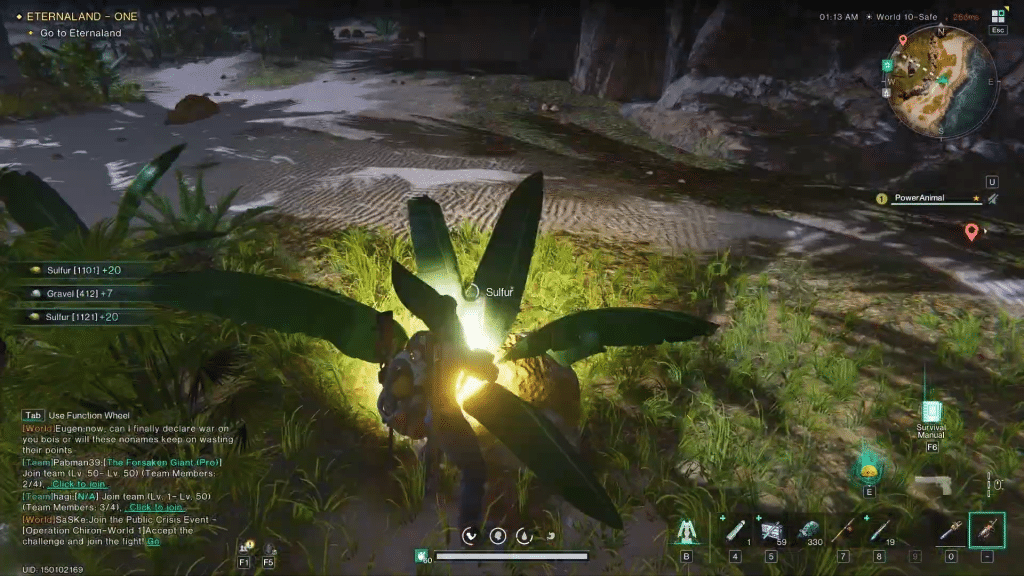
Once Human dropped on July 9, 2024, and the world hasn’t been the same since. Picture a nightmare-fueled sandbox filled with horrors, freedom, and just enough science fiction to keep you up at night. Starry Studio’s vision of the apocalypse is ambitious, chaotic, and dripping with opportunities for creative destruction—which, of course, is where Once Human sulfur fits in.
The current game version, 2.0, launched with a new scenario called Endless Dream. It’s Nightmare-themed, which means more monsters, more anomalies, and more reason to pack explosives. The Once Human Sulfur Guide fits neatly into this expanded landscape. Every update reinforces the need to keep your ammo stocked, your explosives ready, and your enemies vaporized. Version 2.0 bug fixes dropped on July 3 and July 9, 2025, and they’ve made crafting and exploration smoother than ever.
| Game Feature | Detail |
|---|---|
| Release Date | July 9, 2024 |
| Latest Version | 2.0 – Endless Dream |
| Key Update Dates | July 3, 2025 & July 9, 2025 |
| Devs & Publishers | Starry Studio, NetEase |
| Gameplay Theme | Apocalyptic sandbox with freeform survival and combat |
Key features of the game include complete Territory-building freedom, a modular construction system that lets you design your base exactly how you want it—whether that’s a defensive bunker, a workshop-laboratory combo, or an aesthetic cabin in the woods. You can place and rotate each wall, floor, bench, or bed to suit your survival style. For players who prefer mobility over fortification, the game offers drivable RVs. These portable homes let you roam freely across the wasteland while keeping your crafting stations and storage intact. It’s not just survival—it’s survival with style, whether you’re stationary or on the move.
You also get to tame Deviations—formerly feral post-apocalyptic creatures turned loyal battle buddies. These companions aren’t just pets; they serve tactical purposes, acting as frontline tanks, support healers, or flank attackers depending on the mutation. Building a bond with your Deviation is part of the game’s charm. In a world that’s literally crumbling, a mutated squirrel-fox with a plasma tail might just be your best friend. The Once Human Sulfur Guide doesn’t just focus on rocks and acid—it embraces the full ecosystem of survival that makes these moments possible.
Once Human Sulfur: Specialization

The Once Human Sulfur Chemist Memetic specialization is for players who like to mix science with destruction—literally. Once you hit levels 20 and above, you’ll see this specialization slot pop up like a chemist’s dream. It usually lands in the fourth to seventh slots of your Memetic list, depending on your progression.
This specialization doesn’t come early, and there’s a reason for that. It lets you create acid, a key resource for certain high-tier crafts. It’s not flashy. It doesn’t make you glow or give you a super jump. What it gives you is the power to produce corrosive chemicals out of raw materials—mainly Once Human sulfur. The Once Human Sulfur Guide emphasizes how this turns the otherwise flammable mineral into a multi-functional workhorse.
The acid production formula is tied directly to this specialization, making it one of the more niche paths in the game. While it doesn’t provide combat bonuses directly, it feeds into crafting chains that empower your weapons and items. If you’re into managing resources like a mad alchemist, this is your specialization. If not, you might want to skip ahead.
| Attribute | Details |
|---|---|
| Specialization Name | Sulfur Chemist |
| Function | Enables acid production |
| Availability | Levels 20, 25, 30, and 35 |
| Slot Position | 4th to 7th from the top |
| Relevance | Critical for crafting acid using sulfur |
Regardless of your preference, understanding this specialization is key. It affects your decisions on farming, crafting, and territory upgrades. That’s why the Once Human Sulfur Guide gives it space—because even the boring stuff can be powerful if you know how to use it.
Once Human Sulfur: How the Sulfur Chemist Specialization Works
If you’re committed to the Once Human Sulfur Chemist path, it’s time to embrace acid—not the psychedelic kind, but the kind that melts through monsters and makes crafting tick. Acid in Once Human is produced via synthesis benches, and it doesn’t matter if it’s the small one or the industrial beast of a large bench. Both work. The difference? Bigger benches mean faster output—two units at a time versus one.
Every unit of acid requires a cocktail of pain: five units of Once Human sulfur, 100 Energy Links, and eight real-world minutes of waiting. Yes, minutes. The Once Human Sulfur Guide pulls no punches in showing that while acid is powerful, it doesn’t come cheap. You’ll be balancing your sulfur budget faster than a wasteland accountant trying to justify another hour of acid queues.
| Acid Production Detail | Value |
|---|---|
| Station Types | Small & Large Synthesis Benches |
| Input (Per Acid Unit) | 5 Sulfur + 100 Energy Links |
| Time Required | 8 minutes |
| Max Output (Per Hour) | 225 units (15 benches) |
| Daily Output (24h) | 5,400 units |
| Daily Cost | 27,000 Sulfur & 540,000 Energy Links |
At full throttle, running 15 synthesis benches in your Territory feels like operating a wasteland mega-factory. You’ll be pumping out 225 units of acid every hour, totaling a jaw-dropping 5,400 units per day—assuming you keep the machines fed and running nonstop. But the cost isn’t just time. You’re burning through 1,125 units of sulfur and 22,500 Energy Links every single hour. That’s not crafting—that’s industrial-scale chemistry. It’s the kind of setup meant for players who’ve spent hours hoarding materials, upgrading infrastructure, and optimizing every square inch of their base.

And this is where the Once Human Sulfur Guide hits the brakes. Sure, acid production at this scale is impressive, but sustaining it is the real monster. Stockpiling thousands of Once Human sulfur and Energy Links isn’t easy unless you’re playing like a full-time logistics manager. If you can’t maintain the resource input, the acid output collapses. That’s why many players prefer to skip the specialization entirely and gather acid from the world itself—through mob farming, contaminated zones, or trading. No matter which route you take, sulfur remains the threshold. You either mine it, manage it, or move on without it—but there’s no ignoring it.
Once Human Sulfur: How to Acquire Sulfur

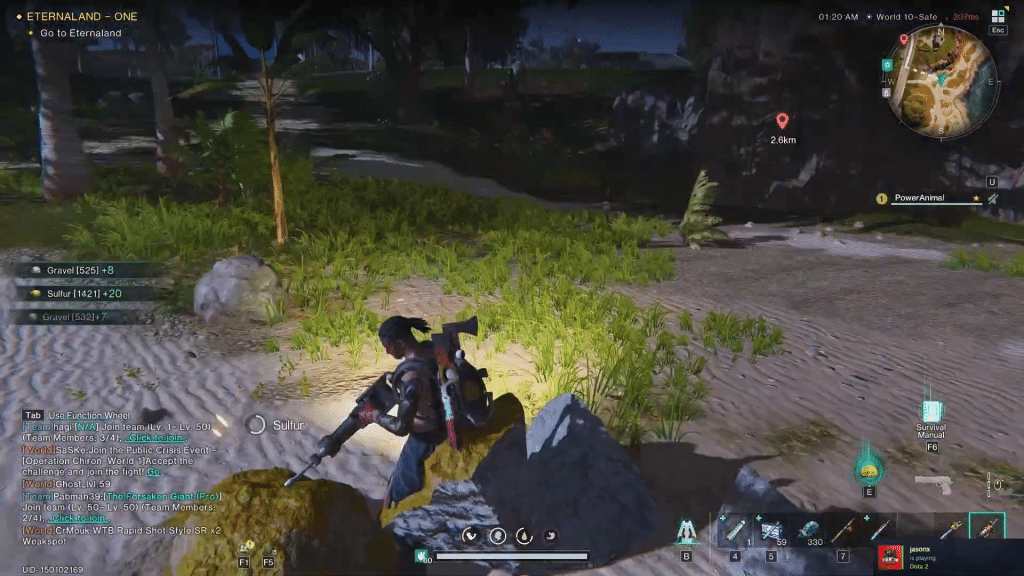
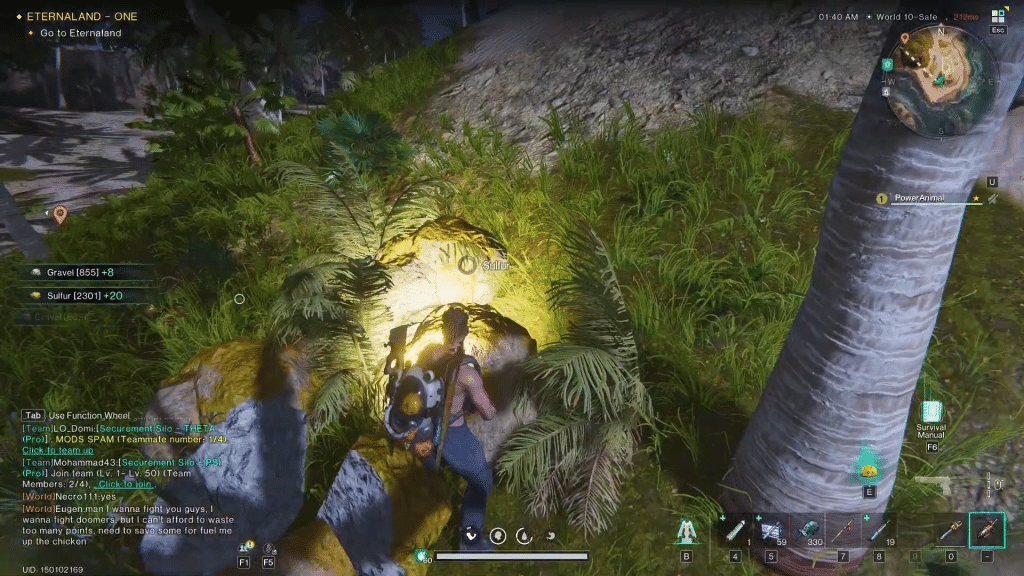
Sulfur in Once Human doesn’t just fall from the sky—it’s earned the hard way, mined with pickaxes and patience. Unlike resources that come from mobs or drop as loot, sulfur has to be actively dug from the terrain, which makes every chunk you collect feel like a small victory. You’ll find it scattered across the Wilderness, hidden in rocky nodes with a distinct mustard hue. They blend into the background with a dusty, brownish-yellow tone and often have mossy or gray overlays. At first glance, they look unremarkable—just part of the scenery—but once you learn their shape, spotting them becomes second nature. It’s like learning to see gold veins in a rock wall.

The Once Human Sulfur Guide recommends one place above all others: Chalk Peak. Located in the Level 36 zone on the southwest edge of the world map, this region is widely considered the prime location for sulfur farming. Teleport to a nearby waypoint, gear up, and bring a vehicle—preferably a motorcycle or something nimble. You’ll want to stick to the hilly, off-road areas. Sulfur nodes rarely spawn near buildings or in flat, open spaces. Instead, they like the high ground, nestled among forested ridges and uneven terrain.
| Acquisition Method | Details |
|---|---|
| Node Appearance | Brownish-yellow, mossy-gray clusters |
| Best Location | Chalk Peak, Level 36 area (SW map) |
| Mining Tool | Pickaxe (Copper/Steel) |
| Average Yield | 16–20 sulfur per node |
| Strategy | Start from hills, descend while looting |
When it comes to gear, you don’t need anything fancy—just a solid pickaxe. A copper or steel pickaxe will do just fine, and each sulfur node you mine typically yields between 16 to 20 units. Bonus: most nodes also drop gravel, which may not seem impressive but adds up for other crafting recipes. If you’re efficient with your movement and know where to look, a single loop around Chalk Peak’s terrain can net you a few hundred sulfur in less than half an hour. That kind of haul gives you real flexibility—whether you’re crafting acid, trading with others, or preparing for a high-tier mission that demands explosive resources. Sulfur isn’t just another item in your inventory.

This part of the Once Human Sulfur Guide cuts to the truth: if you want to thrive as a Sulfur Chemist or even just stay stocked for combat, you need to mine. Acid doesn’t come cheap, and the market doesn’t always deliver what you need when you need it. Mining gives you control—over your resources, your crafting queue, and your economic leverage in multiplayer trade. In the wasteland, chemistry starts with geology. So grab that pickaxe, find your route, and make sulfur part of your daily survival ritual. Because behind every powerful weapon and corrosive flask, there’s a trail of dust, gravel, and mustard-colored stone.
Once Human Sulfur: Sulfur Real World Properties, Historical Uses, and Fictional Portrayals
Sulfur isn’t just a game item. In the real world, it’s been a scientific curiosity, a weapon, a medicine, and even a religious symbol. On the periodic table, it sits with the symbol “S” and atomic number 16. It’s pale yellow, odorless, and completely flammable. And while it won’t blow up on its own, it loves to burn with a tiny blue flame. Real sulfur is a nonmetal, fragile, and nearly useless as a conductor.
Historically, sulfur was a magical stone. The ancient Greeks burned it in temples. The Romans used it in medicine. Alchemists thought it could help turn lead into gold and called it the “stone of philosophy.” In the Bible, it was part of hellfire. The Frasch method, still used today, helped us extract sulfur from underground deposits by pumping hot water through pipes. That’s less glamorous than Chalk Peak mining, but definitely cleaner.
| Context | Details |
|---|---|
| Element Info | Symbol “S”, Atomic #16 |
| Properties | Pale yellow, odorless, flammable |
| Historical Use | Bleaching, medicine, rituals, alchemy |
| Fictional Use | Supernatural (demonic residue) |
| Fun Fact | “Sulfur” means “burning stone” in Latin |
Then came pop culture. In the show Supernatural, sulfur is shorthand for “demons were here.” Sam and Dean Winchester sniff it out like hounds. The “rotten egg” smell they detect isn’t sulfur, though. It’s hydrogen sulfide—sulfur’s stinkier cousin. Powdered sulfur itself? Totally odorless. But the myth worked. It stuck around as shorthand for evil.
The Once Human Sulfur Guide draws a line between fact and fiction. The game uses sulfur as fuel for acid and firepower. Real sulfur? It’s more chemistry lab than combat. Still, both share that fiery, unpredictable spirit. Maybe the alchemists were onto something after all.
Once Human Sulfur: Is the Sulfur Chemist Specialization Worth It?

Here’s the hard truth: the Sulfur Chemist specialization looks good on paper, but reality slaps back. Crafting acid this way requires mountains of sulfur and Energy Links. To run 15 benches non-stop, you’re burning 1,125 sulfur and 22,500 Energy Links every single hour. That’s not efficient—it’s painful. And you don’t get anything exclusive in return.
The acid you craft through this specialization? You can also get it in contaminated zones. Just bring a mask and a stomach for poison. Alternatively, slay mobs and collect acid drops. Or, skip the violence altogether and buy it from player markets using Harvesters. The Once Human Sulfur Guide keeps it honest—this specialization doesn’t unlock anything new or rare.
| Evaluation Point | Verdict |
|---|---|
| Cost Efficiency | Very poor |
| Resource Drain | Extremely high |
| Uniqueness | None (acid available via other means) |
| Recommended Use | Not advised for efficiency-focused players |
| Overall Rating | 2/10 |
It’s a classic case of being unnecessary. Acid is already out there, waiting to be picked up. Why invest so much into a crafting loop that anyone can bypass with a decent farming run? Even in survival games, efficiency matters. And this one’s a time sink.
If you’re a roleplayer who likes playing the “mad chemist,” sure—go for it. But for the rest of us? The Once Human Sulfur Guide verdict is clear: Sulfur Chemist is more like Sulfur Tourist. Cool in concept, but totally skippable in endgame strategy.

Once Human
Play Once Human on PC and mobile for free and join your friends in a post-apocalyptic world. Fight monsters, uncover secrets, and build your own territory in this multiplayer game. Engage in co-op battles, scavenge for resources, and unlock powerful abilities as you reclaim Earth from horrifying creatures.
Frequently Asked Questions (FAQ)
❓What is sulfur used for in Once Human?
🟢Sulfur is mainly used to craft acid, gunpowder, and upgrade weapons. It’s essential for mid- to high-tier crafting paths.
❓Is the Sulfur Chemist specialization worth it?
🟢No. The resource cost is too high, and acid can be obtained more efficiently by farming mobs or exploring contaminated areas.
❓Where can I farm sulfur efficiently?
🟢The Level 36 Chalk Peak area in the southwest of the map is rich in sulfur nodes and great for repeat farming routes.
❓How much sulfur do I need for acid crafting?
🟢Each unit of acid requires 5 sulfur and 100 Energy Links. Scaling up requires serious stockpiling and territory planning.
❓Can I buy acid instead of crafting it?
🟢Yes. Players can purchase acid at the harvester market or gather it in contaminated zones and from defeated enemies.
