 Search
 Account
 Discord


Introduction to Death Scourge
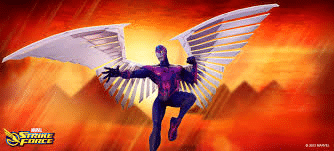
Marvel Strike Force Death Scourge is a recurring game mode that enables players to unlock and fully upgrade the legendary character Archangel. This event runs every two weeks and lasts for five days, providing a consistent schedule that helps players plan their participation strategically to maximize rewards. The reward system is based on Milestones rather than leaderboards, offering Archangel shards to progress from a 3-star unlock at 500,000 points up to a 7-star upgrade at 1,350,000 points. Additional rewards include valuable gear raid orbs and training orbs. Unlocking Archangel at 3 stars typically requires completing a run on Difficulty 4 with almost all scourges active. Increasing to 4 stars generally involves completing Difficulty 5 with all scourges enabled. Achieving a 6-star unlock is possible on Difficulty 6 with all scourges, while reaching Difficulty 7 with most scourges active allows players to complete all milestones, including the 7-star upgrade.
Core Mechanics: Scourges and Difficulty
In Marvel Strike Force, Scourges are selectable modifiers that increase both the difficulty of battles and the points earned, with their impact on score growing exponentially at higher difficulty levels. These modifiers are generally categorized as easy, medium, or hard, each affecting gameplay in different ways. Key scourges include Minion Buffs such as Rise Anew, Undead Swarms, and Super Soldier Serum, which significantly enhance minions and are considered “free points” because they make minion sections much easier. The revive mechanic applies to both your team and enemies, with scourges like Zombification granting enemies Deathproof and Revive Once statuses, complicating battles. Some scourges impose healing and trauma effects, reducing healing or preventing cleansing of negative effects, which requires caution when selecting them. Others increase ability costs or apply ability block and blind debuffs, making abilities harder to use while potentially empowering enemies when combined with effects like “Too Clever.” Negative effect interactions pose high challenges, with scourges like Energy Absorption allowing enemies to cleanse debuffs and heal, and Strong Opener providing enemy immunity on spawn. Offense and defense buffs, along with taunts, vary in difficulty and can significantly alter battle dynamics, especially when combined, such as with Look At Me and Vanguard, which together can create highly tanky enemies. Scourges affecting max health, like Experimental Serum, offer lower point rewards and are generally less efficient unless aiming for extreme challenges. Difficulty levels greatly influence scoring; for example, Difficulty 7 without scourges yields 850,000 points, but with scourges, it can exceed 1.4 million points. Higher difficulties like 8 and 9 offer even greater point potential but demand well-prepared rosters. Minion teams often perform effectively at moderate gear levels due to scourge benefits and do not require the same investment as main teams to succeed.
Node Requirements and Team Recommendations
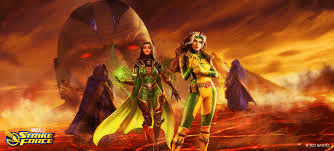
In Marvel Strike Force’s Death Scourge event, each node has specific traits that dictate the type of teams best suited to tackle them. Nodes 1 and 2 feature Minions and Villains, making minion-focused teams highly effective here, especially Ravagers combined with Mercenaries, which handle the battles efficiently without requiring extremely high gear levels. AIM and other minion factions like Hydra, Hand, Shield, and Kree can also be viable, though Ravagers remain the top choice. Nodes 3 and 4 are designated for Heroes, where teams such as X-Treme X-Men, Spider-Society, or P.E.G.A.S.U.S. excel due to their strong utility and synergy. Classic options like Red Hulk, Rogue, Spider Weaver, and Spider-Man 2099 remain solid choices, emphasizing damage control and cooldown management, especially saving ultimates for later nodes. Nodes 5 and 10 focus on Wakandan, Bionic Avengers, and P.E.G.A.S.U.S. teams. P.E.G.A.S.U.S. offers broad utility, but War Dogs are critical for Node 5, requiring key abilities like Nakia’s positive effect removal and Black Panther (1MM)’s powerful striker role. Node 10 demands a coordinated effort starting with Bionic Avengers to eliminate key threats like Gambit using Iron Man’s ultimate, followed by War Dogs finishing the fight, ensuring health and ultimates are preserved from Node 5. Nodes 6 and 7 challenge players with Non-legendary Mutants, where X-Treme X-Men provide strong performance, building on previous strategies involving Unlimited X-Men and Emma Frost for survival and debuff cleansing. Priority targets include Nakia and Sam Wilson, while careful management of minion buffs and enemy ultimates is essential. The final Nodes 8 and 9 are Legendary-focused and require a core team including Red Hulk, Rogue, and Morgan Le Fay, supplemented by characters like Omega Red, Jubilee, and Nick Fury for added control and defense. Strategy on Node 8 involves quickly stunning Gambit and controlling key enemy ultimates while saving Phoenix’s abilities for critical moments. Node 9 centers on managing enemy Safeguards, prioritizing stuns on Spider-Man 2099 and Spider Weaver, and delaying confrontation with Adam Warlock and Phyla-Vell until later in the fight. Each node demands tailored team compositions and strategies to navigate the increasing difficulty of the Death Scourge.
General Strategic Tips
In Marvel Strike Force, the Death Scourge event demands a blend of careful resource planning, strategic thinking, and adaptability. For players aiming to unlock or upgrade Archangel and progress toward the final Apocalypse saga, managing resources wisely is essential. One of the most impactful long-term strategies is prioritizing investment in Horseman teams—Darkhold, Unlimited X-Men, and Gamma. These teams are required for Apocalypse and perform well in both Death Scourge and other high-end content. Upgrading them to at least Gear Tier 16 ensures they are strong enough to handle late-stage nodes and future content, providing value across multiple areas of the game. Free-to-Play players, in particular, should focus their gear, training materials, and resources on these teams rather than spreading investments too thin.
Minions are required for the first two nodes of the Death Scourge, but due to specific minion-enhancing scourges, they can perform surprisingly well even at moderate power levels. With the right modifiers activated, minions benefit from additional healing, revives, and stat boosts, making them effective even at Gear Tier 12–13 and levels 65–75. This makes over-investing in minions unnecessary unless you already use them for other modes. Prioritizing minions like Ravager Stitcher, Ravager Bruiser, Mercenary Riot Guard, and Mercenary Lieutenant allows players to auto or quickly clear the early nodes with minimal effort. Investing just enough to clear these sections is often the best approach, saving your resources for characters who will be useful beyond the event.
Adaptability plays a central role in determining success. The ideal team for each node may vary depending on which scourges you have active and how strong your roster is in those specific traits. For example, a player with a well-built Spider-Society might favor them over classic Hero teams in Nodes 3 and 4, while someone with a fully upgraded Bionic Avengers might rely more on them in Nodes 5 and 10. Scourges can significantly alter the flow of combat, sometimes weakening your core strategies or forcing you to find new combinations of characters to work around mechanics like ability blocks, revives, or healing reductions. Players should regularly assess which scourges they can comfortably handle and adjust teams accordingly, even within the same run.
Cooldown management is another critical layer of strategy. Many of the Death Scourge nodes include multiple enemy waves with specific threats that can be dangerous if not handled properly. Learning when to hold or use key ultimate abilities can make a dramatic difference. For example, saving Red Hulk’s ultimate for Node 8’s opening wave or ensuring that Black Panther (1MM) has his ultimate ready for the final push on Node 10 can be the deciding factor in completing milestones. Careful ability cycling and planning between nodes ensure that your team enters the next battle fully charged and ready to deal with initial threats like Gambit, Spider-Weaver, or Infinity Watch characters.
The structure of the Death Scourge event supports experimentation and gradual improvement. Each run lasts five days, and the event itself runs for a total of ten days on a bi-weekly schedule, giving players multiple opportunities to refine their approach. This extended timeframe allows you to try different team combinations, mix up scourge selections, and test various strategies without penalty. As a result, even if the first attempt doesn’t go as planned, there is time to learn from mistakes, adapt your roster setup, and make a more successful run.
The Death Scourge is ultimately a tactical and methodical challenge that rewards thoughtful planning and mastery over brute strength. It’s less about having the most powerful characters and more about knowing how and when to use them. The event functions like an elaborate puzzle, with scourges acting as keys and team compositions serving as carefully chosen tools. Each choice you make has ripple effects—scourges increase your point yield but add difficulty, while specific character selections may counteract certain debuffs or enemy patterns. Learning how these layers interact—how your own team’s strengths and cooldowns fit into a fight altered by a combination of modifiers—is essential for reaching higher milestone tiers and unlocking Archangel at higher star levels. With thoughtful preparation and a clear understanding of each node’s mechanics, players can turn the Death Scourge into a reliable and rewarding pathway in Marvel Strike Force.
