 Search
 Account
 Discord


- Brawl Ball Arena
- Yellow Box – 50
- Blue Barrel – 6
- Metal Fence – 24
- Metal Fence – 24
- Bush – 104
Brawl Stars Center Field Guide: Introduction
Brawl Stars Center Field is a community-created Brawl Ball map in Brawl Stars that strikes a delicate balance between open-field engagements and strategic use of obstacles. Originally introduced on March 17, 2020, the map was temporarily removed from the game on September 10, 2020, before making a return on August 25, 2021. Its design promotes a fast-paced yet tactical playstyle, where both offensive pressure and defensive positioning play pivotal roles in determining the outcome of a match. The map features a spacious midfield that encourages rapid engagements, precise passing plays, and coordinated team pushes, while walls and bushes are strategically placed to facilitate controlled advances, ambush opportunities, and last-second defensive stops.
One of Brawl Stars Center Field’s defining characteristics is its ability to cater to multiple playstyles. Brawlers with high mobility thrive in the open areas, capitalizing on their speed to create passing lanes, dodge enemy fire, and reposition effectively. Meanwhile, tankier brawlers can use the walls and bushes to close in on opponents and create goal-scoring opportunities with well-timed attacks. The map also favors long-range brawlers who can control space from a distance, limiting enemy movement and punishing mispositioning. However, success on Brawl Stars Center Field is not solely determined by individual skill but by how well a team can synergize their strengths, rotate effectively, and adapt to shifting control of the field.
Due to its open nature, Brawl Stars Center Field often rewards teams that can quickly transition between offense and defense. Aggressive teams can use speed boosts, coordinated passes, and area-denial tactics to overwhelm opponents and create breakaway goal opportunities. On the defensive end, well-placed supers, strategic use of walls, and zoning abilities can halt enemy advances and set up counterattacks. The importance of map control cannot be overstated, as losing control of the midfield often leads to relentless pressure from the opposing team.
While Brawl Stars Center Field’s current availability in the map rotation remains uncertain, its layout remains an excellent study in Brawl Ball strategy. The map demonstrates how spatial awareness, team coordination, and adaptability play crucial roles in achieving victory. Understanding its nuances can help players refine their gameplay, whether they are positioning themselves for an optimal shot, creating space for a teammate, or executing a last-second save to keep their goal protected.
Brawl Stars Center Field Guide: Map Layout Analysis
The most defining characteristic of Brawl Stars Center Field is its open central area, which serves as the primary battleground for controlling possession of the ball. This space is particularly favorable for mid-range and long-range brawlers, as they can continuously apply pressure to opponents attempting to advance. The openness of the midfield allows for quick rotations, precise passing plays, and rapid counterattacks, but it also presents a challenge for teams trying to stay protected from enemy fire. Without proper positioning and cover, players risk being overwhelmed by well-aimed shots and coordinated enemy aggression.
Surrounding the central zone, wall corners create crucial choke points that offer opportunities for strategic positioning. These areas are particularly useful for heavyweight brawlers, who can navigate along the side lanes while remaining relatively hidden from direct attacks. The side lanes serve as alternative routes to the goal, providing flanking opportunities that can catch defenders off guard. Skilled players can use these paths to bypass enemy lines, disrupt defensive formations, and create high-percentage scoring chances while minimizing exposure to long-range threats.
Each goal area is designed with a three-tile-wide opening, allowing for versatile scoring opportunities that reward well-timed shots and precise teamwork. Additionally, the presence of four separate entrances to each goal area, each spanning two tiles wide, makes defensive setups more challenging. This layout forces defenders to cover multiple angles and react quickly to incoming plays, increasing the importance of coordinated teamwork and zoning abilities.
The strategic depth of Brawl Stars Center Field is further enhanced by the abundance of bushes, particularly near the sides and corners of the map. These bush-covered areas provide excellent opportunities for ambushes, sneaky goal attempts, and defensive retreats. Players who utilize these natural hiding spots effectively can set up surprise attacks, stall enemy advances, or create space for their team to reposition. This element of stealth and unpredictability makes the map favorable for brawlers who thrive in control-based and ambush-heavy strategies, adding another layer of tactical decision-making to each match.
Brawl Stars Center Field Guide: Brawler Recommendations and Strategies
Success on Brawl Stars Center Field depends on selecting brawlers that can control space effectively while also being able to push forward offensively. Different types of brawlers thrive in distinct areas of the map, and understanding their roles is key to dominating the battlefield. A well-balanced team composition that includes offensive pressure, defensive resilience, and area control will have the best chance of securing victory.
Versatile Brawlers

Brawlers like Nita and Jacky are strong all-around picks due to their ability to pressure enemies from behind walls while also holding their ground in key areas. Nita’s attack can pierce through obstacles, making her an excellent choice for harassing opponents attempting to take cover, while her Bear Super provides additional control and distraction. Jacky, on the other hand, excels in close-quarters combat with her wide attack radius, allowing her to deal with multiple enemies at once when contesting the midfield or pushing toward the goal. Their high health pools enable them to take damage and maintain presence, making them valuable in both offensive and defensive scenarios.
Heavyweight Brawlers

Tanks such as El Primo and Rosa thrive in Brawl Stars Center Field due to the abundance of walls and bushes, which they can use to maneuver effectively while minimizing exposure to long-range attacks. El Primo can use his high mobility and Super to leap onto enemies, disrupting enemy formations and opening space for his teammates to advance. His ability to break walls can also alter the battlefield in favor of his team. Rosa, on the other hand, is a powerhouse in the side lanes, utilizing the bushes to ambush opponents and maintain control. Her Super allows her to absorb incoming damage, making her an excellent choice for leading aggressive pushes or stalling enemy advances near her team’s goal.
Control Brawlers

For maintaining dominance over the center of the Brawl Stars Center Field map, Emz and Frank are excellent choices. Emz’s attack lingers over time, making her a formidable option for suppressing enemy advances and controlling space. Her ability to deal damage over a wide area makes it difficult for opponents to push forward without taking significant damage. Frank, with his high health and powerful attacks, can establish a stronghold in the middle of the field, forcing enemies to be cautious when engaging. His Super’s stun is particularly devastating in a tightly contested match, as it can immobilize multiple opponents at once, creating game-changing opportunities for his team.
Wall-Penetrating Attackers and Area Control

Brawlers like Mr. P are particularly strong on Brawl Stars Center Field due to their ability to attack enemies hiding behind walls. Mr. P’s turret provides continuous pressure, making it difficult for opponents to move freely. Placing the turret behind the L-shaped walls near the goal ensures its longevity and enhances defensive stability. Alternatively, positioning it further up the map can provide additional support in offensive situations.
Sharpshooter Brawlers

Long-range brawlers such as Colt and Rico can be highly effective when played skillfully. Their ability to deal massive amounts of damage from a distance allows them to control lanes and eliminate key threats before they become a problem. However, their effectiveness is highly dependent on precise aiming, making them more challenging to use in fast-paced encounters.
Each of these brawlers plays a distinct role in shaping the flow of a match on Brawl Stars Center Field. While tanks can push through defenses and create pressure near the enemy goal, control brawlers help dictate the pace of engagements, and versatile brawlers provide consistent support in both offensive and defensive situations. Mastering these roles and adapting to the enemy’s strategy is key to securing victory on this map.
Brawl Stars Center Field Guide: Brawl Ball on Center Field

Brawl Ball on Brawl Stars’ Center Field is an intense, fast-paced mode that tests teams’ ability to balance aggressive offense with solid defensive strategies. The map’s wide open central area provides ample space for mid-range and long-range brawlers to assert control and apply pressure on opponents. These brawlers can effectively harass enemies from a distance while limiting their progress toward the goal. However, the openness of the central field also leaves players vulnerable to counterattacks and long-range shots, demanding constant movement and careful positioning to avoid getting caught out in the open.
The goal areas of Brawl Stars Center Field are framed with walls and obstacles, offering some defensive cover but also creating opportunities for brawlers with wall-breaking abilities, such as Colt or Brock. These brawlers can clear paths to the enemy goal, opening up the field for faster and more direct offensive plays. Additionally, the side lanes, which are lined with bushes, provide tactical advantages for stealthy approaches. Heavily armored brawlers like Rosa and El Primo can use these lanes to flank opponents and catch them by surprise, creating valuable openings for their teammates to score.
Team coordination is crucial to success on Brawl Stars Center Field. Effective communication allows players to combine their abilities and execute strategies that control key areas of the map, such as crowd control or area denial tactics. Working together also means clearing enemies from the field before making a push toward the goal, or ensuring that sharpshooters are blocked from landing long-range shots. Success depends not only on individual skill but also on the ability to function as a cohesive unit that adapts to the flow of the match and exploits any weaknesses in the enemy’s defense.
With its unique combination of open spaces, walls, and bushes, Brawl Stars Center Field demands tactical awareness and strategic positioning. The dynamic nature of the map, combined with the need for precise decision-making and quick reactions, makes each Brawl Ball match a thrilling test of skill, teamwork, and adaptability. Teams that can work together, communicate effectively, and seize the right opportunities will consistently outperform their opponents on this exciting map.
Brawl Stars Center Field Guide: General Tactics and Tips
To succeed on Brawl Stars Center Field, teams must combine strategic movement, proper positioning, and efficient use of abilities to outplay opponents. Given the mix of open areas, walls, and bushes, adapting to the flow of the match and capitalizing on key moments is essential. Here are some important tactics to keep in mind:
Destroying Walls for Easier Goals

Breaking down the walls in front of the opponent’s goal significantly increases scoring opportunities by eliminating defensive cover. Brawlers with wall-breaking Supers, such as Colt or Brock, can open up these areas, making it easier for teammates to take direct shots or dribble the ball in without obstruction. Clearing these barriers also provides better shooting angles for long-range attempts, preventing the enemy from relying on walls to block shots. In some situations, removing walls can also disrupt enemy positioning, forcing them to play in more open areas where they are vulnerable to long-range attacks.
Utilizing Walls and Bushes for Cover

The numerous walls and bushes on Brawl Stars Center Field should be used strategically to gain an advantage in fights. Walls act as barriers against enemy fire, allowing brawlers to take cover while waiting for an opportunity to strike. Short-range and mid-range brawlers can use these structures to maneuver safely and engage opponents on their own terms. Meanwhile, bushes enable stealthy approaches and ambush plays, making them particularly useful for brawlers who rely on close-range attacks. Defenders should always be cautious of enemies hiding in the bushes near their goal, as they can use these areas to intercept the ball or set up surprise counterattacks. Proper vision control and awareness of these hiding spots are crucial for preventing unexpected plays.
Eliminating Opponents Before Attempting to Score
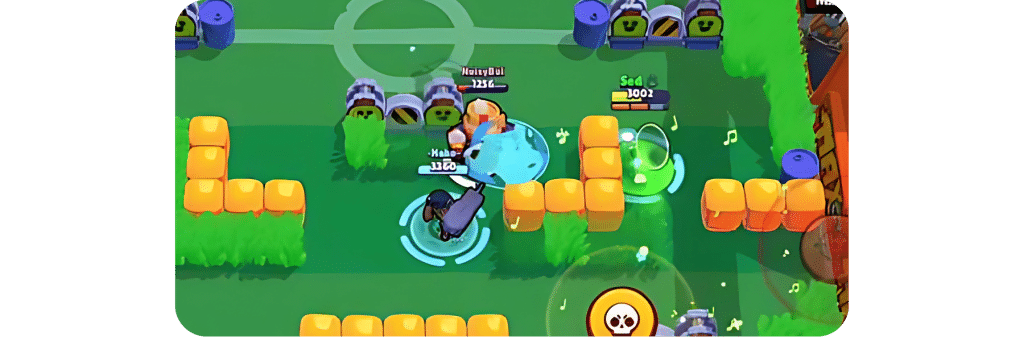
One of the most reliable ways to ensure a successful goal is to eliminate key enemy threats before making a push. Defeating opponents creates a temporary numbers advantage, giving a team the opportunity to move forward and score with minimal resistance. This is particularly effective against defenders with strong area control, such as Frank or Emz, who can prevent goals if left unchecked. However, teams must balance aggression with caution—overcommitting to an attack can lead to unnecessary eliminations, allowing the enemy team to counterattack and shift momentum in their favor. Coordinating eliminations with teammates and recognizing when to retreat or re-engage is essential for maintaining control over the match.
Brawl Stars Center Field Guide: Conclusion
Brawl Stars Center Field is a map that demands careful strategic positioning and exceptional team coordination. The open central area offers a vital battleground where controlling space can lead to significant advantages. Teams that dominate the center can effectively disrupt enemy advances and apply pressure. However, while holding the middle is crucial, the side lanes and surrounding bushes play an equally important role. These lanes offer alternative attack routes and flanking opportunities, allowing brawlers to catch opponents off guard and bypass traditional defenses. Mastery of both the central area and side routes is essential for maintaining a well-rounded approach to the match.
Brawler selection is a key factor in Brawl Stars Center Field’s success. Teams that can tailor their lineup to suit the map’s diverse terrain and combat scenarios are more likely to prevail. Offensive brawlers who can control the center and apply constant pressure are valuable, but defensive brawlers who can block paths, protect the goal, and prevent break-ins are just as important. Flexibility in choosing brawlers who can adapt to different moments in the match—whether it’s pushing forward or defending crucial zones—can tip the scales in favor of the more strategic team.
Effective positioning is another pillar of success on Brawl Stars Center Field. For offense, brawlers must find the optimal spots to launch attacks, using cover when necessary and ensuring that long-range brawlers have clear sightlines. Defensive players must remain vigilant, monitoring both the central area and the side lanes for potential threats. Brawlers who can control the space around their goal and deny enemies easy access to bushes or openings will significantly reduce the risk of a quick score. Whether holding the middle or working the flanks, positioning must be dynamic and responsive to the unfolding game.
Finally, communication and adaptability are critical to achieving victory on Brawl Stars Center Field. Teams that communicate well, plan their movements, and adjust tactics based on the flow of the match will outperform those who struggle to coordinate. Successful teams understand when to push aggressively, when to retreat and regroup, and when to take advantage of a temporary numerical advantage. Center Field is a true test of skill and teamwork, where a well-executed game plan and adaptability to the ever-changing battlefield will consistently lead to success.

