 Search
 Account
 Discord

Introduction to Arena Meta

Marvel Strike Force Arena META represents the current pinnacle of team compositions and strategies that dominate the competitive Arena Leaderboard. It’s a dynamic landscape shaped by the unique strengths, synergies, and counters among various characters and teams. As the game continually evolves through new character releases, balance updates, and seasonal events, the Arena META shifts accordingly, requiring players to constantly reassess and refine their approach to team building and combat tactics.
At its core, the Arena META identifies the optimal balance between offense, defense, control, survivability, and speed. Teams that excel in these areas tend to outperform others by efficiently maximizing damage output, applying crowd control effects like stuns or debuffs, and sustaining their lineup through healing or damage mitigation. Speed, often one of the most critical factors, determines turn order and the ability to disrupt or finish off opponents before they can react.
Character synergies are a cornerstone of the META, where certain heroes or villains enhance each other’s abilities, leading to powerful combos that can turn the tide of battle. Successful teams leverage these synergies to execute complex strategies such as combo chains, buff/debuff stacking, and protection of key damage dealers. Conversely, understanding common META teams allows players to develop counters—lineups specifically tailored to neutralize dominant strategies, exploit weaknesses, and control the flow of combat.
Keeping abreast of META shifts is essential, as even subtle changes in character abilities or introduction of new heroes can drastically alter which teams are viable. Meta knowledge empowers players to optimize their roster investments, focusing resources on leveling, gearing, and upgrading the most effective characters for Arena success. This targeted development helps ensure consistent performance and progression within the highly competitive PvP environment.
Moreover, mastering the Arena META is crucial for climbing ranks and securing rewards such as premium currency, character shards, and exclusive gear. High-ranking players often participate in end-of-season rewards and events, where the stakes are greater, and META mastery becomes even more important.
In summary, the Marvel Strike Force Arena META is an ever-changing ecosystem defined by the interplay of character power, team synergies, and counter-strategies. To stay competitive, players must continuously learn and adapt, optimizing their teams not just for raw power but for tactical superiority. Those who understand and exploit the Arena META effectively gain a significant advantage, rising through the ranks, earning valuable rewards, and thriving in the fast-paced, strategic battles of Marvel Strike Force.
Current Arena Meta Teams
In Marvel Strike Force, understanding the Arena Meta is key to building competitive teams that excel in various scenarios. When including Professor Xavier, the best characters feature Quasar, Professor Xavier himself, Knull, Mephisto, and Odin. A specific defensive team in this setup combines Professor Xavier, Knull, Odin, Gladiator, Gorr, and Apocalypse. Professor Xavier stands out as one of the strongest characters, thanks to his ability to prevent opponents from gaining critical buffs such as Assist, Taunt, Speed Up, and Defense Up, while also protecting allies from debilitating debuffs like Slow and Darkness until his first turn. His Mind Control ability can decisively turn battles by taking over opponents. Quasar’s high speed and team-wide Defense Up and Immunity upon spawn are vital for shielding Professor Xavier from control effects. Knull supports the team by blocking opponents from becoming Empowered, countering threats like Mephisto, while his usual vulnerability to Odin is neutralized in Xavier’s presence. Mephisto serves as the primary offensive powerhouse, dealing heavy damage early and removing Immunity with his special ability. Odin’s overwhelming power and his ability to apply the Battlefield Effect make him a pivotal character for controlling the flow of combat.
For offensive strategies involving Professor Xavier, the core team remains largely the same, with Emma Frost replacing Quasar to reduce enemy speed by 10%, enabling your key characters to act first. Emma Frost also provides utility on defense but can face counters like Apocalypse and Nightcrawler who negate her speed debuff. Executing the strategy involves using Mephisto’s special to remove Immunity from the enemy Xavier, Odin’s special to apply Battlefield Effects, Knull’s special to disrupt opponents, and targeting the opposing Xavier with Professor Xavier’s Mind Control for maximum impact.
Without Professor Xavier, the Arena Meta shifts toward a team centered on Knull, Odin, Gladiator, Gorr, and Apocalypse. Mephisto’s influence declines as Knull’s presence blocks Empowered status, limiting Mephisto’s damage potential early on. Gladiator acts as a vital protector, especially shielding Odin from Speed Bar reductions, while Gorr prevents opponents from assisting, which is crucial against Odin-based teams. Apocalypse plays a supportive role by buffing the team, preventing speed reductions (except for Slow), ensuring Odin’s attacks land with increased accuracy, and stopping enemies from spawning with Safeguard. This composition focuses heavily on maximizing Odin’s damage output. The main counter to this setup is a mirror match, primarily due to Apocalypse’s significant buffs to Odin, making both teams formidable.
If both Odin and Knull are unavailable, the strongest viable team combines Gladiator, Apocalypse, Mephisto, Thanos (Endgame), and Gorr. This group benefits from a trio of Annihilators (Gladiator, Gorr, Thanos) who have recently gained stat boosts, alongside two Mythic characters, Mephisto and Apocalypse. However, players are encouraged to prioritize recruiting Odin and Knull to eventually replace Mephisto and Thanos (Endgame), as their presence strengthens team effectiveness considerably.
For new players who haven’t completed higher-level content such as Dark Dimension 7 and 8 or the Apocalypse Saga, a recommended team consists of Gladiator, Ultimus, Silver Surfer, Thanos (Endgame), and Gorr. Within this lineup, it is important to prioritize investments in Thanos (Endgame), Gladiator, and Gorr over Silver Surfer and Ultimus to build a strong foundation. New players should focus on recruiting and investing in Annihilators as they progress, ensuring a smoother path into competitive Arena play within Marvel Strike Force.
Upcoming Arena Meta Shift: Fantastic Four MCU
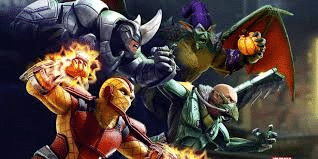
The Fantastic Four MCU team represents the latest and highly anticipated addition to the competitive Arena roster in Marvel Strike Force, marking a significant evolution in the game’s meta. Introduced with the specific intent to challenge and ultimately surpass the long-standing dominance of the Annihilators—a powerhouse team known for their overwhelming synergy and devastating capabilities—the Fantastic Four MCU squad brings a fresh and innovative dynamic to Arena battles. This team’s design thoughtfully incorporates unique abilities and synergies that directly counter the current meta strategies, forcing players to rethink their tactics and team compositions.
At the core of this new team lies a diverse array of powers that blend offense, defense, and utility in ways that disrupt established patterns of play. The Fantastic Four MCU team leverages iconic character traits from the Marvel Cinematic Universe adaptation, incorporating signature abilities such as Invisible Woman’s force fields and invisibility, Mr. Fantastic’s incredible elasticity and control skills, and other members’ complementary powers that amplify the team’s overall effectiveness.
However, while this team is poised to shake up the Arena, it is not without formidable opposition. Among the existing roster of characters, Professor Xavier stands out as the primary counter to the Fantastic Four MCU lineup. His potent control abilities—particularly his mind control and crowd control effects—pose a significant challenge to the Fantastic Four’s synergy, potentially disrupting their coordinated assaults and defensive maneuvers. This makes Professor Xavier a pivotal figure in high-level Arena matchups where strategic counterplay is essential.
The rollout of the Fantastic Four MCU characters is also strategically staged. The release plan prioritizes Invisible Woman MCU and Mr. Fantastic MCU, whose unique skill sets establish the initial framework for the team’s functionality. These two characters are expected to be accessible before the arrival of Franklin Richards, who is widely regarded as the linchpin for unlocking the full potential of the Fantastic Four MCU team. Franklin Richards’ abilities are anticipated to bring transformative effects that could redefine how the team performs in Arena combat, enabling powerful team-wide buffs, survivability boosts, or other game-changing mechanics that catalyze a complete meta shift.
As more players gain access to these characters and integrate the Fantastic Four MCU team into their Arena strategies, the competitive landscape is expected to undergo significant upheaval. This fresh synergy and tactical depth will not only offer new counters to existing top-tier teams but also open up diverse strategies and matchups. Ultimately, the Fantastic Four MCU’s arrival heralds an exciting era for Marvel Strike Force players eager to explore novel gameplay possibilities and redefine the boundaries of competitive Arena play.
General Considerations and Advice for Arena
In Marvel Strike Force, a universal tier list is generally considered ineffective due to the game’s diverse modes and specialized character tags. Instead, success comes from focusing on top-performing teams tailored to specific game modes, which allows for more strategic and effective gameplay. Power creep is a significant factor in the game’s evolution, with newer characters and teams consistently designed to overshadow older ones. This results in meta squads from just one or two years ago becoming largely obsolete and cycled out of competitive play.
For free-to-play players, resource management is less about the amount of resources available and more about making smart choices in character development. It is recommended to prioritize building newer characters to keep pace with the evolving meta, rather than investing heavily in older or niche legacy characters like Apocalypse or Super Skrull, as game updates typically incorporate older characters into content when necessary.
Player experiences reveal that maintaining a top position in Arena can be difficult following updates, especially against dominant teams featuring Gladiator, Knull, Odin, Mephisto, and Thanos (Endgame). Teams led by Professor Xavier are especially tough opponents, often winning battles while remaining at full health. To support their progress, players can engage with the community through Discord channels, which provide valuable advice and assistance for Arena strategies and other game modes.
Ultimately, the constantly shifting nature of Marvel Strike Force’s meta encourages players to remain adaptable and informed. Success hinges not only on building the strongest teams but also on understanding the intricacies of each game mode and anticipating upcoming changes. By staying connected with the community, analyzing new updates, and strategically allocating resources toward characters with the highest potential impact, players can continue to thrive in this competitive landscape. The game’s evolving environment ensures that no single strategy reigns supreme indefinitely, rewarding those who are proactive, flexible, and knowledgeable. As Marvel Strike Force continues to grow, embracing these principles will be key to long-term success and enjoyment.
