 Search
 Account
 Discord

Introduction to Battleworld

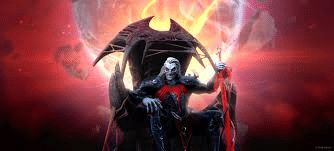
Marvel Strike Force Battleworld is a recurring monthly game mode in Marvel Strike Force designed to challenge alliances through coordinated strategy and teamwork. Each Battleworld event lasts for four days and tasks alliances with the mission of conquering a series of territories across a hostile, unstable planet. The objective is to neutralize threats and secure zones by earning Victory Points (VP) through various combat encounters and objectives. As alliances progress, they must accumulate a sufficient number of VP within a single day to unlock and move forward to the next zone. If they fall short of the required VP, they will have to repeat that zone on the following day, although any previously earned VP will carry over. This mechanic emphasizes consistent participation and planning, as failing to advance through all necessary zones will prevent the alliance from accessing the final confrontation with Knull, the ultimate boss of the mode.
The event structure encourages alliances to optimize their strategy across multiple zones while adapting to increasing challenges. The initial run of Battleworld for each alliance plays a key role in setting the tone for future events, as their performance during this first iteration determines the difficulty level assigned to them in subsequent rounds. Higher difficulties increase the intensity and complexity of battles but also offer significantly greater rewards, making progression a worthwhile pursuit for competitive alliances. Overall, Battleworld serves as a test of coordination, tactical execution, and long-term alliance growth, rewarding groups that work efficiently together and maintain active participation throughout the event.
Battleworld Structure and Missions
Battleworld in Marvel Strike Force is structured as a four-day event, with each day representing a different zone that alliances must conquer in sequence. Each zone is available for one full day, and players can only use each character once per day across all missions, which encourages careful planning and roster management. For every mission, players are given three attempts, and each battle has a six-minute timer. However, the timer pauses during turn-based decision-making, allowing time to strategize without pressure.
From Days 1 through 3, each zone contains three distinct mission types. The Standard Mission requires players to defeat five waves of enemies—20 opponents total—in order to clear the node and earn Victory Points (VP). The Herald Mission pits players against a powerful mini-boss and their team in a single-wave encounter that demands more precise team composition and tactics. The Elite Mission offers an opportunity to use specialized Battleworld teams that have unique bonuses or abilities tailored for this game mode. Completing these missions earns VP, which contributes to alliance progression toward the final day.
On Day 4, alliances face the ultimate challenge in the Knull Boss Battle. All members have three attempts to deal as much damage as possible to Knull, with total alliance damage being pooled together. If the combined damage from the alliance is enough to defeat Knull, bonus rewards are granted. Knull is designed to be a formidable opponent, with several key immunities including Ability Block, Exhausted, Exposed, and Stun. His Speed Bar cannot be reduced, and no single attack—including Bleeds, stolen Health, or percentage-based attacks—can deal more than 3% of his Max Health, which equates to roughly 4 million damage on higher difficulties. He can summon Symbiote minions and inflict Darkness, a status effect that causes characters to become mind-controlled. For every stack of Rage he gains, Knull’s Damage and Speed increase by 10%, making him progressively more dangerous over time.
Revival rules also vary in this battle. If a character is defeated by one of Knull’s Symbiote summons or by an ally under mind control, they can be revived for future attempts. However, if Knull himself lands the killing blow, the character is permanently removed from use for the rest of the event. When Knull is finally defeated, he respawns at full health but loses his accumulated bonuses, such as Rage. While defeating him a second time doesn’t yield additional direct rewards, it does increase the alliance’s Season Points, which improves their rank on the event leaderboard and contributes to long-term competitive progress.
Requirements and Combat Modifiers
In Battleworld, each mission comes with specific entry requirements that dictate which characters can be used. These Trait requirements might include tags like City, Villain, Tech, or other classifications, ensuring that players build varied and well-rounded rosters. In addition to these core requirements, missions often feature bonus objectives that reward extra Victory Points (VP) when completed with specific characters or teams, such as earning bonus VP for using Superior Six members within a City-tagged mission. This system encourages strategic team-building and deeper investment in a wider range of characters.
Adding further complexity to each mission are Combat Modifiers—unique conditions that alter the dynamics of battle. These modifiers often strengthen enemy forces and can either apply universally to all characters or target specific groups, such as only affecting enemies or only influencing characters with certain Traits, Iso-8 Classes, or team affiliations. For example, some modifiers may increase enemy damage output if they belong to a specific Trait, grant them extra resistance to debuffs, or enhance their abilities based on their team synergy. Others might reduce healing for all characters on the field or grant bonus Speed to enemies with the Support Iso-8 class. These modifiers change from zone to zone and mission to mission, requiring players to analyze and adapt their strategy with each attempt. Understanding and preparing for these Combat Mods is critical to mission success, especially in higher difficulties where even small tactical advantages can make the difference between victory and failure.
Spec Ops
Most zones in Battleworld feature Special Operation (Spec Ops) missions that offer alliances an additional way to earn Victory Points (VP) by submitting characters rather than engaging in combat. These missions are cooperative and require participation from multiple alliance members to complete. Each Spec Ops zone contains a specific submission grid, or hex, that requires 30 total character entries to count toward alliance VP. To complete all eight Spec Ops zones, an alliance must submit a total of 240 characters, with each zone requiring 30 characters across six designated options, and up to five of each character can be submitted per zone.
The characters required for each Spec Ops zone are predetermined and remain static from week to week. This consistency allows alliances to plan ahead by leveling and gearing specific characters that will be needed in future iterations of Battleworld. However, each Spec Ops zone also comes with escalating difficulty requirements. Starting at Spec Ops 1 (SO1), characters must meet a minimum of 3 yellow stars, and by Spec Ops 8 (SO8), the requirement rises to a 1 Diamond character rating. Some mid-tier zones may include additional conditions such as 7 yellow stars, specific Gear Tiers like Gear Tier 15, or higher Iso-8 Class levels. This tiered structure adds a progressive challenge to the submission process and encourages long-term character development.
Strategic decision-making plays a key role in Spec Ops planning. Some characters that are required for Spec Ops submissions may also be eligible for use in combat missions, forcing players to make choices about where to deploy limited resources. Whether submitting a valuable character to help complete a Spec Ops grid or preserving them for battle in a difficult mission, alliance members must communicate and coordinate closely to optimize their contributions across both combat and support objectives. Efficient management of Spec Ops participation can significantly impact an alliance’s overall VP gains and leaderboard performance in Battleworld.
Victory Points (VP) and Progression
Victory Points (VP) in Battleworld are the core metric that drives alliance progression and determines access to higher difficulties and new zones. VP is earned through two primary activities: completing combat missions and submitting characters in Spec Ops. In combat missions, players gain more VP by clearing additional waves of enemies, with full clears yielding the highest point totals. Spec Ops contributions also generate valuable VP once the required number of character submissions has been met in each zone.
To unlock higher difficulty tiers within Battleworld, an alliance must accumulate a set amount of VP. Each new difficulty level becomes available once the alliance reaches a predetermined VP threshold, encouraging consistent participation and teamwork. However, progression between zones is gated by a fixed VP requirement: 60,000 VP must be earned to move from one zone to the next, regardless of the chosen difficulty. This requirement is the same across all difficulty levels, creating a balanced standard for progression.
It’s important to note that any excess VP earned in a zone does not carry over into the next. Progress in the following zone only begins once its timer starts, at which point new VP can be accumulated toward that day’s 60,000-point goal. This means alliances must stay engaged daily, as early overperformance does not provide a head start for subsequent zones. Proper planning and steady daily execution are essential for clearing all zones within the event window and reaching the final boss encounter against Knull.
Rewards
Battleworld provides a wide range of rewards designed to support player progression and incentivize alliance participation across multiple tiers of activity. Rewards are distributed through several channels, each offering valuable resources for character development. Mission Completion Rewards are granted as players clear waves during combat missions, with higher wave completion yielding better rewards. Daily Rewards are provided for completing missions each day and include Battleworld credits, T3 Level 1 Ions, Blue ISO-5, and Blue ISO-4 resources, contributing to both character strengthening and long-term Iso-8 advancement.
The fourth day of Battleworld features the Boss Battle against Knull, which offers some of the most sought-after rewards. These include Knull character shards, Purple Ions, high-tier Blue Level 4 and 5 Ions, and additional Battleworld currency. The number of Knull shards awarded depends on both the event difficulty and how much of Knull’s total health is depleted by the alliance. For example, defeating 100% of Knull’s health at Difficulty 5 grants the full shard payout, while Normal difficulty yields a smaller portion, such as 30%.
At the end of each monthly event cycle, Monthly Rewards are distributed and include more Battleworld currency, Purple Iso-8 Credits, and Blue Iso-8 Credits. These rewards accumulate across the entire four-day event and contribute to sustained player growth. In addition to monthly rewards, Battleworld features a Season Leaderboard that tracks total Alliance VP earned over four full sieges. Rewards from this leaderboard are issued every four weeks and include Purple Ions, Blue Level 4 and 5 Ions, Basic Purple Iso-8 Orbs, and Diamonds used to promote specific characters.
Battleworld credits earned from missions and boss battles do not expire and have no maximum storage limit. This currency can be saved and used at the player’s discretion in the Battleworld Store, which remains open even when the game mode itself is paused between events. This allows players to plan their spending around long-term goals without fear of losing earned rewards or facing inventory restrictions.
Strategy and Team Recommendations
In Battleworld, the primary objective for alliances is to complete combat missions first, as these provide significantly more Victory Points (VP) than Spec Ops submissions. Efficiently clearing missions is crucial for reaching the daily VP threshold of 60,000 per zone. If the required team compositions are well-developed, it is often possible to one-shot missions, especially on lower difficulties, which helps conserve character availability for future days and ensures consistent progress.
For Zone 1, the Standard Mission requires Global and Hero tags. A reliable team includes Old Man Logan, Black Knight, Hank Pym, Jean Grey, and Storm, with alternatives such as Nightcrawler or Phoenix. Full Liberty or Uncanny Avengers squads also perform well. The Herald Mission for Global and Villain tags is effectively handled by the Orchis team (excluding Sentinel) paired with Apocalypse. The Elite Mission allows either Astral or Spider-Society teams, with Astral being the superior choice due to their survivability and damage output.
In Zone 2, the Standard Mission focuses on City and Villain characters, with the Superior or Sinister Six performing well—specifically Green Goblin (Classic), Doctor Octopus, Lizard, Vulture, and Mysterio. The Herald Mission, which uses City and Hero tags, favors the Vigilante characters such as Blade, Oath, Punisher, Silver Sable, and Daredevil (Modern). For the Elite Mission between Astral and X-Treme X-Men, Astral again proves to be the dominant option due to their overwhelming effectiveness in both damage and utility.
Zone 3 increases in complexity. The Standard Mission for Cosmic and Hero tags can be tackled with Odin, three members of the new Absolute A-Force, and Moondragon. The Herald Mission for Cosmic and Villain tags works best with a high-damage team of Gorr, Gladiator, Thanos (Endgame), Super Skrull, and Mephisto. A useful strategy here is to avoid attacking Oath until all Vampire enemies are defeated, as this maximizes VP rewards. The Elite Mission again allows Astral or Spider-Society characters. An Astral team is preferred, possibly supported by Penny Parker, especially if Moondragon is assigned elsewhere. If Penny falls, Doctor Strange can revive her.
The Knull Boss Battle on Day 4 is the event’s most difficult encounter, and alliances benefit from having multiple viable teams for attempts. The Astral team is the top-performing option, capable of reducing Knull’s health by 20–30% on Difficulty 5. A strong secondary team consisting of Mephisto, Odin, Thanos (Endgame), Kahhori, and Black Knight can deal approximately 10–15%. Spider-Society characters like Peter B. Parker, Penny Parker, Spider-Man (Pavitr), Old Man Logan, and Nightcrawler offer solid sustain and deal about 10% damage to Knull; however, players should avoid using Old Man Logan’s Ultimate unless Knull has Barrier to prevent damage waste. Vigilante teams excel at mitigating damage and clearing Barrier effects, particularly with strong ultimates from Punisher, Silver Sable, and Elektra. A sustain-focused squad of Knull, Odin, Mephisto, Black Knight, and Kahhori performs well through prolonged engagements. Other functional teams include Absolute A-Force, characters from Dark Dimension, and custom-built Mythic or Legendary squads. When attacking Knull, focus single-target abilities on him directly. Only use area-of-effect attacks when Symbiote summons are present to avoid wasting potential damage.
Careful roster planning, synergy awareness, and strategic combat execution across these team compositions will significantly improve an alliance’s ability to clear all zones, defeat Knull, and maximize both event and leaderboard rewards in Battleworld.
Battleworld Changes and Community Feedback
Battleworld was temporarily placed on hold following its initial pre-season test period to allow for key improvements based on community feedback. This pause provided the development team an opportunity to refine several aspects of the mode to enhance the overall player experience. The primary goals of the adjustment period were to reduce the coordination burden placed on alliances, ensure that Battleworld provided a rewarding and time-efficient gameplay experience, and make participation more feasible for smaller or less active alliances.
One of the major changes implemented during this pause was the removal of the Spec Ops feature, which previously required alliance-wide character submissions to earn additional Victory Points. While Spec Ops were removed to streamline participation and reduce logistical complexity, they may return in a future update if reworked to better fit the game’s pacing and player feedback. To help compensate for the temporary absence of Battleworld, Purple Iso-8 resources were added to War rewards, ensuring players continued to have a path toward progression during the event’s downtime.
With the relaunch of Battleworld on February 18th, the game mode returned with additional updates and balancing, including increased availability of Knull character shards. These changes were designed to ensure that players who missed earlier opportunities to unlock or power up Knull would have improved access upon the mode’s return. Together, these adjustments reflect a broader effort to evolve Battleworld into a more accessible, rewarding, and engaging long-term feature within Marvel Strike Force.
