 Search
 Account
 Discord

Introduction to Havok and Polaris

Marvel Strike Force Havok and Polaris are two distinct characters who bring unique abilities and strategic value to their teams. Havok, known for his powerful energy manipulation, is a blaster whose primary role is dealing heavy damage to enemies from a distance. He is closely associated with the Starjammers, a team known for their offensive capabilities and synergy focused on high burst damage and quick eliminations. Havok’s abilities allow him to unleash concentrated energy blasts that can significantly weaken opponents, making him a vital asset in battles where raw damage output is crucial.
Polaris, in contrast, plays the role of a controller, specializing in crowd control and battlefield management. She is a member of both the X-Factor and Immortal X-Men teams, groups that emphasize tactical control and resilience. Polaris uses her magnetic powers to manipulate the battlefield by restricting enemy actions and providing strategic advantages for her allies. Her abilities often involve stunning, weakening, or otherwise hindering opponents, allowing her team to maintain the upper hand during fights. With a combination of support and control, Polaris enhances the survivability and effectiveness of her team, making her an essential character for coordinated strategies.
Together, Havok and Polaris exemplify different approaches to combat in Marvel Strike Force—Havok focusing on raw offensive power as a blaster, while Polaris excels at control and disruption as a controller. Their inclusion in their respective teams adds depth and versatility, enabling players to adapt to various combat scenarios with a balanced mix of damage output and tactical control.
Havok: The Explosive Blaster
Havok in Marvel Strike Force is a Hero with Cosmic, Mutant, Blaster, X-Men, and Starjammer tags, designed as an explosive damage dealer with solid health points. His primary role is to inflict high damage early in battles while disrupting enemy defenses. Havok applies key negative effects such as stun, Trauma, and Heal Block at the start of combat, making him effective at controlling the pace of fights. He excels against enemies with barriers by blocking their immunity, lowering their damage reduction, and applying disruption to create openings for his team. A defining feature of Havok’s kit is his counterattack ability, which triggers unavoidable piercing damage when he, a Starjammer, or an X-Men ally is attacked, dealing even more damage if the enemy has a barrier. Additionally, in the Cosmic Crucible mode, Havok gains a speed buff for himself and Starjammer allies for each enemy with a barrier, enhancing team synergy and action economy. His ultimate ability not only delivers strong damage but also grants Safeguard to himself and allies from Starjammer and X-Men teams upon killing an enemy, providing valuable protection and survivability.
When prioritizing Havok’s Tier 4 abilities, the Special should be maxed first due to its two-turn stun and Trauma effects, which are effective even outside of the Cosmic Crucible. The Ultimate is next in importance, delivering a powerful kill shot that applies Safeguard and Defense Down for two turns, making it vital for both offense and defense. His Passive ability is a significant upgrade, doubling the piercing damage on counterattacks and improving interactions with enemy barriers, while the Basic is a luxury upgrade that flips two random negative effects and boosts damage but is less critical.
For ISO-8 setups, the Raider class is recommended as it maximizes Havok’s damage potential by increasing the number of Vulnerable debuffs applied and enhancing critical hits and damage, making it ideal for his multi-target abilities. Striker is a viable alternative but generally offers less synergy compared to Raider’s benefits.

Community feedback on Havok has been mixed, with some initial disappointment over the Starjammers’ overall performance in the Cosmic Crucible, especially against non-Cosmic Crucible teams, older meta teams, and certain raid teams. Concerns about underperformance arise if Havok is not fully maxed out in abilities and gear. However, some players have found success using Havok in X-Men teams, particularly with X-Treme X-Men compositions where his counterattack synergy with characters like Gambit shines. In these setups, Havok is often seen as a “better Gambit” due to his enhanced counterattack damage and barrier utility, making him a valuable asset in certain X-Men strategies. This balance of strong offensive capabilities and team support solidifies Havok’s role in Marvel Strike Force as a versatile and impactful blaster.
Polaris: The Mutant Controller
Polaris in Marvel Strike Force is a Hero with Global, Controller, Mutant, and X-Factor tags, also associated with the Immortal X-Men team. She is a versatile controller capable of dealing significant damage, especially through critical hits, while providing valuable utility to her team. One of her key mechanics is the ability to remove all deflect buffs from the most injured enemy whenever an X-Factor ally lands a critical hit, disrupting enemy defenses and making them more vulnerable to follow-up attacks. Polaris’s ultimate ability can flip all Regeneration effects on enemies to Bleed, which is particularly effective against teams that rely heavily on healing, such as those featuring Doc Ock or Symbiotes. She also gains additional critical hit chance, with her special ability often critting the primary target, amplifying her damage output significantly. Her basic attack applies a Barrier to the most injured non-summoned ally, providing defensive support for her team. In Cosmic Crucible offense, Polaris lowers the critical hit chance of all enemies based on the number of Immortal X-Men allies she has, further bolstering her team’s survivability.
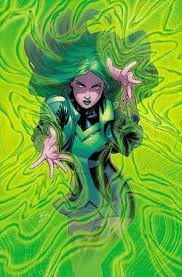
When upgrading Polaris’s Tier 4 abilities, her passive should be prioritized first due to its powerful effect on lowering enemy critical chance during Cosmic Crucible offense. The special ability comes next as it enhances damage and grants Polaris a chance to always critically hit, which greatly increases her offensive threat. The ultimate is useful for flipping Regeneration to Bleed but is less crucial in most matchups. The basic ability is considered the least essential upgrade, as its barrier application provides only a minor benefit. Polaris is strong without requiring all Tier 4 upgrades immediately, allowing flexibility in investment.
For ISO-8 sets, Raider is recommended as it complements Polaris’s ability to consistently crit with her special, enhancing her damage and critical hit synergy. In terms of team synergy, Polaris excels with X-Factor, particularly alongside Shatterstar, who provides Defense Down and additional critical hit opportunities, and Multiple Man, whose clones can absorb or steal positive effects and trigger free attacks from Kestrel. Adding Baron Zemo as a fifth member in X-Factor teams enables the group to take extremely early turns by triggering early critical hits, allowing for quick and powerful strikes, especially effective in modes like Blitz against teams such as Black Order. Polaris also serves as an effective counter to Secret Avengers by removing their deflect buffs when critical hits land, helping to neutralize their defensive advantages. Overall, Polaris offers a blend of damage, control, and utility that makes her a valuable asset in various team compositions within Marvel Strike Force.
Havok and Polaris – Shared History vs. Current Game Design
Many players have expressed a desire for greater synergy between Havok and Polaris, given their historical connection through teams like X-Factor. However, in Marvel Strike Force, their designs reflect distinct team roles that do not encourage them to be paired together as an optimal duo. Havok’s abilities and kit strongly align with Starjammers and X-Men teams, focusing on explosive damage and barrier disruption, while Polaris plays a crucial role within X-Factor and Immortal X-Men teams, emphasizing control, critical hits, and support. This separation in team structures suggests that they are intended to excel in different compositions rather than function as a direct partnership within the current game meta.

General Game Observations and Player Frustrations
In Marvel Strike Force, many players feel that developer testing for new characters does not always account for the full range of real-world gameplay scenarios. Testing is often perceived to be conducted under idealized or “equal footing” conditions, which may not accurately reflect the variety and unpredictability of actual player matchups. This has fostered a sense among the community that players themselves are effectively “paying to test” new characters, as those who invest in freshly released heroes often discover their true strengths and weaknesses through firsthand experience rather than through thorough pre-release balancing.
This issue is further complicated by the ongoing cycle of stat reworks and power creep, where newer characters frequently require reaching higher star levels and unlocking diamond upgrades before they perform at their intended power level. This gradual ramp-up not only shifts the overall performance baseline upward but also incentivizes continued spending and progression to keep pace with the evolving meta. Players often find themselves in a position where initial impressions of a character may not fully represent their eventual potential, leading to frustration when early underperformance is corrected only after significant investment.
Game balance discussions within the community frequently highlight the need for a “rock-paper-scissors” style of gameplay, where teams have clear counters and weaknesses, promoting strategic diversity rather than allowing new teams to dominate indiscriminately. While players expect new characters and teams to justify the resources spent on them, there is also a strong desire for fairness and meaningful counterplay. The introduction of teams designed specifically for niche modes, like the Cosmic Crucible’s Starjammers, has been met with mixed reactions. Although these teams may excel within their intended environment, they often struggle against established, older teams or those built for other game modes, leading to disappointment in their versatility and overall value.
This complex interplay between developer testing practices, power progression systems, and balance philosophy contributes to ongoing community concerns about fairness, investment value, and the long-term health of Marvel Strike Force’s competitive landscape. Players seek a more transparent and effective approach to character design and testing that ensures new additions enhance the game without compromising balance or alienating those who invest heavily in building their rosters.
