 Search
 Account
 Discord


Introduction to the Invasion Event: Quasar
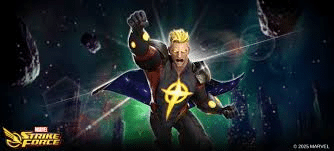
Marvel Strike Force Invasion – Quasar is a recurring in-game event that allows players to unlock the new Legendary character, Quasar, through a structured combination of tasks and challenges. This event is centered around consistent player engagement, rewarding those who participate in daily, weekly, and monthly missions available through the Command Center. In addition to unlocking Quasar, players also have the opportunity to earn Red Stars for the character by actively participating in the Invasion Event, which runs alongside the main Trials. This dual-reward system encourages ongoing gameplay and strategic planning over time.
The event format is an evolution of the familiar Trials system, drawing from mechanics seen in earlier Legendary character releases like Shadow King and Nova. All Trials in this format are based on modified versions of Scourge Events, which are known for their difficulty scaling and team-specific requirements. These adjustments provide an additional layer of challenge for players looking to maximize their rewards while testing the strength and synergy of their rosters. Quasar’s release is especially notable, as it marks the first Legendary character introduced under the Age of Annihilus, a major new narrative and gameplay phase in Marvel Strike Force.
The Quasar event is structured to unfold progressively during Chapter 1, following a monthly release cycle. At the outset, players gain access to eight missions, forming the initial core of the event. Additional missions—typically four at a time—are introduced in the following months, expanding the event’s depth and allowing players more opportunities to earn character shards and event-related resources. For example, new missions may be added across May, June, and July, giving players time to prepare and build up their teams in anticipation.
Participation is open to all players who have reached level 50, ensuring that mid- to late-game players can engage meaningfully with the content. The event also includes a key feature that allows players to quit any node and restart it, enabling strategic retries to improve performance and outcomes. This feature is particularly useful for optimizing team compositions and managing difficult battles, especially in the later stages where enemy difficulty increases significantly. Overall, the Quasar event provides a comprehensive and rewarding challenge for dedicated players, tying into the broader Marvel Strike Force ecosystem with narrative depth and gameplay variety.
Progression and Rewards
The Quasar event in Marvel Strike Force features a wide range of difficulty levels and battle modifiers designed to challenge players of various progression stages while offering increasingly valuable rewards. The event consists of 10 Difficulty Levels, each tailored to test different levels of team power and roster development. As players advance through higher levels, they will encounter stricter character trait requirements and tougher enemies, but they are also rewarded with more points and better milestone progression. Notably, Difficulty 9 presents a more accessible challenge compared to Difficulty 10, with a significant drop in enemy health and overall encounter difficulty, making it a strategic choice for players aiming to maximize efficiency.
To further customize the event’s challenge and reward structure, players can activate various Modes, also known as Pacts or Scourges. These modifiers directly impact battle dynamics and scoring potential. The more challenging the activated Modes, the higher the final Run Score, which contributes to overall event milestones. Strategic selection of these Modes allows players to fine-tune their approach based on team strengths and weaknesses. Among the most recommended Modes is HARBINGER OF ANNIHILUS, which temporarily enhances Quasar by boosting his stats and granting him Vigilante, Thunderbolt, and Accursed traits. This bonus diminishes as Quasar gains more Yellow Stars across repeated runs. Other valuable Modes include STORM WARNING, which enables all Raid Abilities; WORLD AT WAR, which activates War Abilities; BIO-ARMOR, which grants allied Bio characters Safeguard on kills—a strong boost for Thunderbolt teams; SOUL STEAL, which allows Mystic Villain characters to generate Ability Energy on kills; and EVASIVE MANEUVERS, where allied Bio characters gain Evade when any character dies, adding survivability and control.
Players are also advised to consider disabling certain Modes that may prove overly difficult or counterproductive for their specific team compositions. For example, EXPERIMENTAL SERUM III increases enemy Max Health by 30%, making battles considerably more drawn out and dangerous. ROPE A DOPE provides enemies with strong defensive buffs when ending turns with the Vulnerable status, posing a threat to Vigilante-focused lineups. VILE RALLY and ENERGY ABSORPTION allow enemies to cleanse debuffs and heal, significantly undermining damage-over-time and control strategies. FORGED IN FIRE enhances both player and enemy characters with Cosmic Crucible abilities, which can backfire if the team is not built around Accursed traits.
Milestone and Red Star rewards are tightly linked to the combination of difficulty and active Modes during a run. To unlock 6 Red Stars for Quasar, players must complete at least Difficulty 8 with all recommended Modes enabled, while avoiding EXPERIMENTAL SERUM III. Reaching all milestone rewards, including Milestone 15, generally requires a full run on Difficulty 9 with all high-value Modes active, again excluding EXPERIMENTAL SERUM III, or completing the original eight missions on Difficulty 10 under the same Mod conditions. However, it is not mandatory to finish every node on Difficulty 10. By activating enough powerful Mods and securing high scores, players can reach the final milestones even if they skip the last one or two missions. This flexibility allows for strategic planning and team optimization to overcome the event’s toughest challenges while maximizing Quasar’s potential in Marvel Strike Force.

Team Requirements and Strategy
In the Quasar event in Marvel Strike Force, players engaging with Difficulty 5 and above must build teams that meet specific trait requirements across different missions. These traits dictate the eligible characters and significantly impact team composition. Missions 1, 2, 7, and 8 require characters with either the Harbinger trait or Quasar himself. Missions 3 and 4 are restricted to Vigilante or Quasar characters, while Missions 5 and 6 broaden the options to include Vigilante, Thunderbolt, or Quasar. For Missions 9 and 10, players must use Thunderbolt or Quasar characters, and the final Missions 11 and 12 expand further to include Thunderbolt, Accursed, or Quasar. This trait structure emphasizes Quasar’s versatility, as he qualifies for every mission, making him central to successful runs at higher difficulties.
Recommended team setups vary depending on mission sets. For Missions 1 through 8, a strong Vigilante team built around Quasar is highly effective. A common composition includes Punisher, Silver Sable, Daredevil (Modern), Hit-Monkey, and Quasar. In this lineup, Quasar often replaces Elektra or Punisher and functions similarly to a second Silver Sable, accelerating ability usage through Speed Bar control and energy management. Players report that with Quasar integrated into the Vigilante team, many of these early missions become significantly easier. To reach event milestones, most players find Gear Tier 19 and Level 105 sufficient for the Vigilantes, although some achieve success at Level 100 with well-placed T4 ability upgrades.
For the final missions, 9 through 12, a Thunderbolt-based team is recommended. An effective lineup often includes Songbird, Victoria Hand, Hyperion, Ghost, and Quasar. In these stages, team synergy and survivability become more critical due to the spike in enemy power. Gear Tier 19 is generally necessary for this segment, with some characters—depending on the player’s strategy and mod setup—needing Gear Tier 20. Taskmaster, though occasionally used as a sub, can sometimes function well at Gear Tier 18. However, some players report that Thunderbolts are less fluid in combat compared to Vigilantes, and heavy investment in them solely for the event may not feel as rewarding, especially if they lack broader viability in other game modes.
During combat, proper target prioritization and ability timing are crucial. Players should avoid triggering key enemy passives, such as attacking Ms. Marvel (Classic) when she is Charged, and focus on disabling or eliminating dangerous enemies like Omega Red (Phoenix Force) or Shadow King early. Quasar’s basic ability is especially powerful, applying the Exposed debuff which punishes enemies that gain positive effects by reducing their Speed Bar, stealing health, and launching bonus attacks. On Difficulty 9, these tactics are often enough to make enemies fall quickly due to reduced health compared to Difficulty 10. Missions 9 and 10, however, are notoriously difficult; Mission 9 pits Thunderbolts against Liberty characters and often demands several retries with favorable RNG, while Mission 10 features Super Skrull and presents a sharp challenge if Quasar is not included or underleveled.
Energy conservation is generally unnecessary across these missions thanks to Mode bonuses that grant ability energy on enemy defeat, especially with the Vigilante team. Elektra, in particular, provides strong energy generation on spawn, further reinforcing this approach. Overall, success in the Quasar event hinges on team composition, trait compliance, and the strategic use of Quasar’s abilities, offering a complex but rewarding experience for players across higher tiers of Marvel Strike Force gameplay.
Conclusion
A strong Vigilante team, bolstered by the inclusion of Quasar, is essential for efficiently progressing through the Quasar event in Marvel Strike Force and securing all milestone rewards. Quasar’s synergy with the Vigilante lineup enhances overall team performance, enabling faster clears and more consistent runs across the early and mid-tier missions. Although the Thunderbolt team becomes necessary for the final nodes due to specific trait restrictions, many players report that Vigilantes offer a smoother and more effective experience throughout the bulk of the event. Their synergy, speed control, and utility—especially when paired with Quasar—make them a reliable choice for reaching high scores and advancing through multiple difficulty tiers.
For players aiming to complete all milestones and maximize Quasar’s potential, characters should ideally be at max level with a minimum of Gear Tier 19. While top-level performance is most consistent at Level 105, some players have managed success on Difficulty 9 with characters at Level 100, provided their teams are well-built and supported by strategic mod selection. The event is intentionally designed to be difficult but fair, rewarding thoughtful planning and targeted investments. Leveraging the right team compositions, mastering ability usage, and understanding the flow of each mission can significantly reduce the challenge and streamline the path to full milestone completion in Marvel Strike Force.
