 Search
 Account
 Discord


Introduction

Gardener
HP Sewing
Specializes in crops and biomechanics. Can graft crops with other crops or biomechanical parts to yield dual-stat crops or special biomechanical crops. Biomechanical parts are sometimes dropped by Biomechanical Deviants in the wilderness.
- Talents
-
- Environmental Expert
- Portable Planting
- Greenhouse Technology
-
Starting Item
- Portable Planter Box
- Environment Detector
The Once Human Gardener class isn’t your average green thumb. It’s a blend of plant science, mutation magic, and post-apocalyptic farming. Think less “cottagecore” and more “combat botanist.” Introduced in Version 2.0: Dreamveil, the Gardener class opened up a whole new way to survive and thrive—literally—by engineering the land around you. It’s not just about growing food; it’s about growing tools, traps, and tactical advantages.
At its core, the Once Human Gardener is a specialist. You’re not charging into battle with a shotgun—you’re creating mutated plants that are your weapon. Hybrid flora can slow, defend, distract, or even poison enemies, giving you and your squad the upper hand. And because of the class’s ability to farm rare resources, you’ll be every Chef and Beastmaster’s best friend. Expect your base to become the team’s favorite pit stop. What makes the Once Human Gardener exciting is how well it ties into broader gameplay.
GARDENER: CORE ABILITIES

HP Sewing
Specializes in crops and biomechanics. Can graft crops with other crops or biomechanical parts to yield dual-stat crops or special biomechanical crops. Biomechanical parts are sometimes dropped by Biomechanical Deviants in the wilderness.
TALENTS
Environmental Expert
Deeply attuned to the natural world. Equipped with an Environment Detector that monitors environmental parameters in real time, and can craft items to restore and enhance soil conditions.
Portable Planting
Has a Portable Planter Box that can store biomechanical parts or process mature crops to mass-produce seeds.
Greenhouse Technology
Has a Greenhouse Module that can manipulate crop growth environments.
STARTING ITEM
Portable Planter Box
Used to store and bring biomechanical crops outside the territory.
Environment Detector
Tracks nearby environmental conditions when held in the hand.
How to Choose the Gardener Class

Choosing the Once Human Gardener class in Once Human is all about knowing what kind of role you want to play in this twisted, plant-loving apocalypse. If you’re creating a new character on a non-novice server, you’ll get the chance to pick the Once Human Gardener profession right after finishing your tutorial tasks. It’s a smart choice if you want to focus on growth—literally and figuratively. The Once Human Gardener path doesn’t come with a sword or a flamethrower, but it lets you engineer crops that can be more dangerous than either.
Already knee-deep in the chaos and thinking of switching roles? You can change your current class to Once Human Gardener using a Class Fragment. These fragments pop up through scenario challenges or, if you’re lucky, your in-game mail. It’s not instant gratification, but it’s worth the shift if your current class feels more like deadweight than deadly. There’s also the Freelancer path, which skips class perks entirely, but that option is best left for folks who like doing things the hard way—or plan to switch classes later using the included class-change item.
| 🌱 When | 🛠️ How | 🧠 Why Choose Gardener? |
|---|---|---|
| New Character | Pick during setup after tutorial (non-novice server only) | Early access to plant-focused skills and hybrid crops |
| Existing Character | Use Class Fragment from challenges or mail | Mid-game role change for farming, support, or deviation crafting |
| Freelancer | Start without class, change later with included item | Flexible start, but no class perks at first |
| Ongoing Updates | Watch for balance patches and new features | Class-change items make experimentation safe 🌾 |
Because the class system is still under public testing, changes will come. Expect tweaks, buffs, nerfs, and maybe even entirely new mechanics down the line. Thankfully, the devs toss out class-change items like seeds in spring, so if your Once Human Gardener build ever starts feeling like a wilted tomato, you can pivot without much pain.
Gardener’s Starting Equipment and Core Abilities
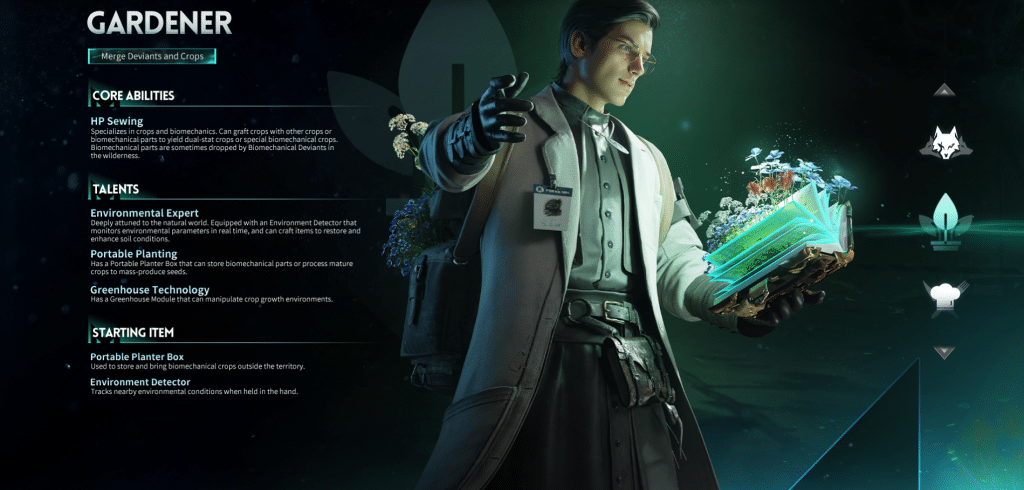
The Once Human Gardener starts with a toolkit designed to turn every inch of wasteland into fertile ground. Right from the beginning, the class unlocks the HP Sewing ability, which lets players splice and graft crops in strange but useful ways—think of it as Frankenstein farming. This lets you combine regular seeds with biomechanical parts, making dual-stat or biomechanical crops that would make even the game’s mutants blush with envy. It’s a core mechanic and the heart of what sets the Once Human Gardener apart from your average survivor.
Your inventory also includes key tools like the Portable Planter Box, allowing you to grow wherever you roam. Whether you’re out exploring or knee-deep in a battle zone, this lets you cultivate crops on the fly. The Environment Detector rounds out your kit, helping you identify good soil, track environmental factors, and essentially act like a high-tech garden whisperer. These aren’t just gimmicks—they’re vital for optimizing where and how your crops thrive, especially outside of your base.
| 🌱 Item / Ability | ⚙️ Function |
|---|---|
| HP Sewing | Graft two plants or biomechanical parts to create enhanced or hybrid crops. |
| Portable Planter Box | Lets you grow crops while exploring or away from base. |
| Environment Detector | Scans for soil quality, temperature, and ideal planting zones. |
| Greenhouse Core | Main gardening base used for irrigation, lighting, and advanced crop splicing. |
| Soil Solution | Fertilizer item that boosts regional soil output for higher yields. |
The Greenhouse Core deserves its own paragraph. It’s not just a pretty structure—it’s your nerve center. It controls lighting, irrigation, and even allows advanced HP Sewing operations. This baby eats 15W of power but pays for itself with every successful graft. Toss in the bonus ability to brew Soil Solution, and you’re not just a gardener—you’re a biomechanic botanist rewriting nature. The Once Human Gardener isn’t about planting seeds and hoping—they’re about engineering outcomes.
Key Mechanics and Gameplay
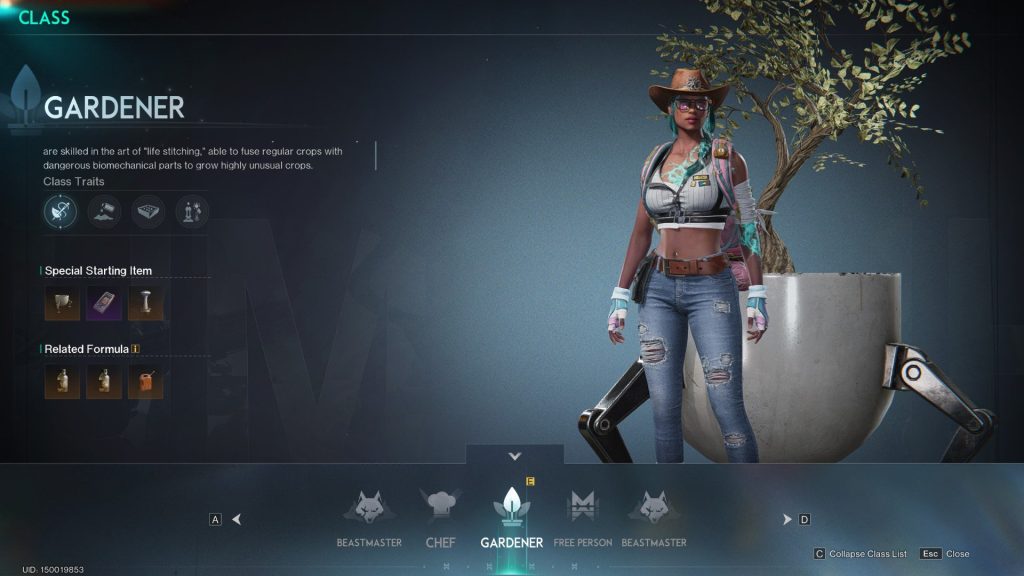
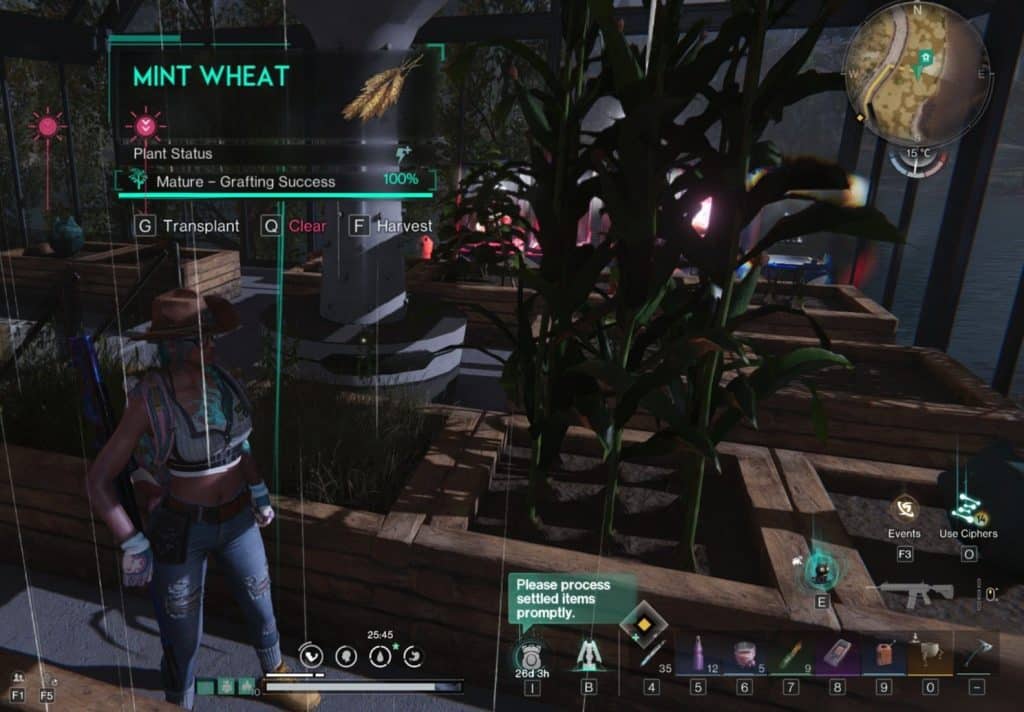
Mastering the Once Human Gardener means learning how to manipulate life—literally—from soil to splice. At the heart of this class is HP Sewing, a grafting mechanic that lets you stitch together plants or fuse them with biomechanical parts. The results can be powerful, weird, or sometimes just straight-up failures that yield “deviated plants.” You’ll need patience, planning, and a willingness to experiment. Not every crop can be grafted, and not every graft will succeed, but when it works? Pure botanical brilliance.
To boost your odds, Grafting Catalysts become your best friend. There are two types—one for crop-to-crop combinations and another for biomechanical fusions. They’re crafted using Detoxidents (you’ll want to raid hospitals for those), and they offer a small bump in success rate—1–2% for normal catalysts, 5–10% for refined ones. That might sound minor, but when your precious seed stock is limited, every percent counts. Just don’t go overboard; each catalyst has a three-use limit per graft.
Soil quality matters just as much as seeds. The Once Human Gardener thrives when working with fertile land. Use the Environment Detector to scout ideal plots, and don’t forget to boost fertility with Soil Solution (crafted with spoiled food, fertilizer, and water). Each planting reduces fertility, so you’ll need to rotate, restore, or let the soil rest. Keeping soil levels above 250 is solid; 700 is peak gardening heaven. High fertility means faster growth and better harvests.
| 🌿 Mechanic | 🔍 Key Function | 💡 Pro Tip |
|---|---|---|
| HP Sewing | Graft plants with other plants or biomechanical parts. | Can create powerful dual-stat crops, but not all grafts will succeed. |
| Grafting Catalysts | Boost graft success chance. | Craft using Detoxidents; refined versions give bigger bonuses. |
| Soil Fertility | Affects crop yield and growth speed. | Maintain 250+ fertility; use Soil Solution to restore depleted land. |
| Portable Planter Box | Grow, store, and deploy biomechanical crops anywhere. | Only one box allowed—replacing the crop deletes the old one. |
| Greenhouse Core | Regulates crop lighting and irrigation at base. | Inefficient without automation—unlock Grow Light and Auto-Water upgrades. |
The Portable Planter Box is like carrying a greenhouse in your backpack. It lets you breed seeds, grow biomechanical crops, and deploy them anywhere—even mid-journey. It’s incredibly flexible, but you only get one, and replacing the crop inside wipes the old one permanently. That adds a bit of tactical pressure to how and when you use it. Still, for a roving Once Human Gardener, it’s a game-changer.
Finally, the Greenhouse Core is your powerhouse back at base. It regulates light and water—assuming you can keep it fed with 15W of power and a ridiculous amount of boiled water. Manual irrigation is inefficient, so invest in Logistics skill tree upgrades to automate it. Once that’s handled, your greenhouse becomes the cornerstone of large-scale hybrid farming. For any Once Human Gardener who wants to build a high-efficiency food lab, this is the beating heart of your operations.
Biomechanical Parts and Their Uses
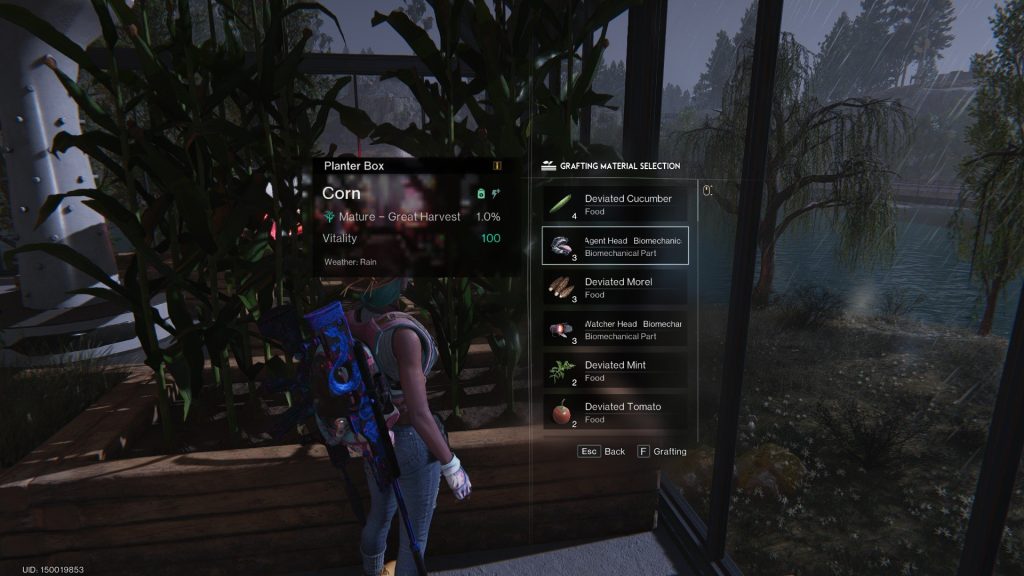
Biomechanical parts are one of the quirkiest tools in the Once Human Gardener arsenal. These organic machine pieces drop from Deviants—mutated creatures with a bad attitude and worse hygiene. Instead of tossing these parts, clever Once Human Gardeners graft them onto crops, creating freakish little plants with useful perks. Some spit orbs. Some mine rocks. Some just sit there and glow like a proud uncle with a flashlight. It’s weird science in the best way possible.
Handling biomechanical parts requires a little caution. At the Disassembly Bench, these parts show up in your scrap list by default—yes, even the rare ones you didn’t mean to touch. One absent-minded click and they’re gone forever. Worse, if you let them rot in your bag, they’ll expire. Always move them into secure storage or graft them quickly. That little extra effort could mean the difference between a base filled with passive resource generators and a sad pile of missed opportunities.
| 🔩 Part Name | 🌱 Grafted Effect |
|---|---|
| Agent | Weak turret that shoots power orbs |
| Balloon | Creates a balloon shooting target |
| Bulb | Adds decorative light to your base |
| Digger | Mines resources like Sulphur automatically |
| Lamp | Enhances plant light and provides warmth |
| Morphic | Produces crops, seeds, and deviated versions passively every 5 minutes |
| Rainfall Reaper | Buffs elemental damage (3%) for nearby players |
| Scorcher | Acts as a furnace and flame-spewing turret; supports crafting queue of 3 |
| Watcher | Freezes enemies that approach, but weak and easy to avoid |
Some biomechanical parts offer serious utility. The Morphic part stands tall, cranking out crops, seeds, and deviated versions like a caffeinated farmhand. The Digger turns into a handy mining station. Scorchers work double-duty: part furnace, part flamethrower. Sure, some grafted plants like Agent or Balloon don’t do much in combat, but for a Once Human Gardener looking to protect their base or automate a few tasks, the weird and wonderful potential is undeniable. Just don’t expect these botanical buddies to carry you in battle.
Tips and General Advice for Gardeners

Becoming a Once Human Gardener isn’t just about planting seeds and hoping for the best. It’s a methodical, often messy journey of experimentation. Early on, your goal should be survival, not perfection. That means grafting fast, cooking faster, and getting cozy with the soil stats. The logistics tree is your best friend here—unlock irrigation and lighting early so you can automate the boring parts and focus on building a garden that does half the work for you.

Soil matters more than you think. After every harvest, your regional fertility drops like a rock. Keep Soil Solution production going constantly to maintain the sweet spot of 250–700 fertility. If you ignore this, even the best seeds won’t grow properly. It’s a grind, yes, but a manageable one with proper prep. And don’t overlook biomechanical parts—Morphic pieces are gold. They’ll passively produce ingredients, saving you hours of tedious farming.
| 🌿 Tip Area | 📌 Key Advice |
|---|---|
| 🚿 Irrigation & Light | Unlock early in Logistics to automate watering and warmth |
| 🌱 Soil Fertility | Keep it between 250–700; use Soil Solution after each harvest |
| 🧠 Grafting Strategy | Focus on function over form—combine for utility, not just looks |
| 🧩 Morphic Parts | Farm Morphic Crates to automate crop and seed production |
| 🤝 Class Synergy | Pairs best with Chef (recipes) and Beastmaster (mutated companions) |
| 🗓️ Seasonal Awareness | Server rules and class balance may shift—stay flexible |
The Once Human Gardener doesn’t live in a vacuum. Your class is a support powerhouse when paired with a Chef (who needs those crops) or a Beastmaster (who needs the grafted pets). Play your role, know your grafts, and remember: even though the system’s in testing, your plants still follow the same logic. When in doubt, experiment. Every failed graft is still progress. A Once Human Gardener learns by doing—preferably with dirt under their nails and a seed in their pocket.
🌻 What is the Gardener class in Once Human?
The Once Human Gardener grows powerful mutated plants that aid allies or damage enemies, making them a unique support and control role.
🌻 How do I mutate crops in Once Human as a Once Human Gardener?
Use mutation seeds near growth zones. Boost effects with soil quality, rare seeds, and synergy with other Once Human gardeners.
🌻 Can the Gardener fight enemies in Once Human?
Yes, while not a direct brawler, they use plants and traps to deal AoE or status damage, perfect for crowd control.
🌻 What plant mutations should Gardeners focus on?
Tranquil, Acidic, and Thorned are strong choices—each offering different strategic buffs or enemy debuffs.
🌻 How does a Gardener support the team in Once Human?
Gardeners provide healing zones, slow enemies, and grant team buffs with their garden creations—great for PvE and PvP.
