 Search
 Account
 Discord

Once Human Rock: Introduction

Rock in Once Human is more than just background scenery—it’s the backbone of your survival efforts. From the first stone you chip away with a basic pickaxe to the thousands you’ll need for crafting war-ready bases, rock is one of the most constant and critical resources in the game. Whether you’re building your first walls or smelting exotic ores for advanced gear, you’ll be seeing a lot of it, hoarding more of it, and cursing your limited inventory space because of it.
The Once Human Rock Guide is here to turn that rocky relationship into a strong alliance. Rock plays a role in nearly every major crafting recipe and infrastructure project, and understanding its different forms, where to find them, and how to process them is key to accelerating your gameplay. Some rocks are simple—just stone and gravel—but others are sneaky and house precious metals or crystals inside their layers. Learning how to tell the difference can save you hours of blind swinging and wasted trips.
| Key Element | Description |
|---|---|
| Resource Name | Rock |
| Importance | Core material for crafting, building, refining |
| Appears In | Nodes, cliffsides, boulders, quarries |
| Types of Rock | Stone, Gravel, Iron Rock, Silica Rock, Crystal |
| Tools Required | Pickaxe, Drill, Companion (optional) |
Beyond crafting, rocks support your entire build philosophy. Base expansions, turret placements, storage units, and environmental upgrades all demand a steady stream of raw or processed rock. Mastering the mechanics behind this humble resource is what separates rookies from the real-world shapers. If your base looks like a fortress and your tools never break, you probably already read the Once Human Rock Guide.
This guide isn’t just about hitting boulders—it’s about smart mining, strategic planning, and rock-solid efficiency. You’ll learn where to find the best nodes, how to mine like a pro, and what to do with all that stone when your stash is overflowing. Welcome to the real foundation of your survival journey.
Once Human Rock: Where to Find It

The world of Once Human isn’t shy about throwing rocks your way. You’ll stumble upon them near roads, cliffs, and ruins, especially in early-game zones like Broken Delta. But location matters. Random boulders may give you basic stone, but specialized nodes nestled in mountainous regions often yield higher-quality materials like Iron Rock or Silica Rock. If you’re after the good stuff, you’ll need to hike into rougher terrain and dig smarter.
Broken Delta is your first real introduction to efficient rock gathering. Here, soft rock nodes are plentiful, making it a great place to farm Stone and Gravel. As you progress, Desolate Canyon and the Erosion Zone become key mid-tier mining hubs, offering nodes with better density and rare materials. Endgame players should venture into Ashfall Rift. This high-threat region is home to Crystal Rock and Quartz nodes—resources needed for high-tech gear and crafting stations.
| Region | Rock Type Yield | Level Range | Notes |
|---|---|---|---|
| Broken Delta | Stone, Gravel | 1–10 | Ideal for early building materials |
| Desolate Canyon | Iron Rock, Stone | 10–25 | Good for base upgrades |
| Erosion Zone | Silica Rock, Aluminum | 20–35 | Needed for electronics and fuel |
| Ashfall Rift | Crystal Rock, Quartz | 35+ | Endgame gear crafting |
The trick lies in identifying high-yield areas. Rock outcrops with sparkly textures or distinct layering are likely to contain metals or crystals. These visual cues are subtle but repeatable, and recognizing them will help you avoid wasting time on low-value rubble. Keep your eye out for Mining Zones—clusters of ore-rich nodes that regenerate after roughly an hour. Placing a base nearby gives you consistent access and a quick stash point.
Understanding regional distribution is critical to efficient farming. You’ll return to some areas not just for their resources but because they offer the best rock-to-risk ratio. If you’re serious about gathering, knowing where to swing that pick matters more than how hard.
Once Human Rock: How to Mine Efficiently
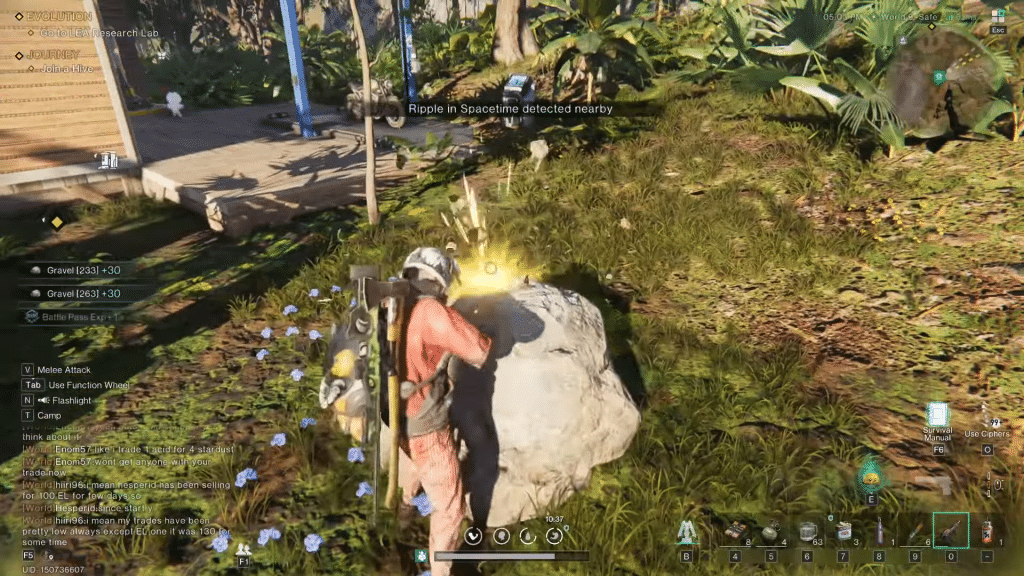
Mining rock in Once Human can be as smooth or painful as you make it. Without the right tools and planning, it’s a slog. But with a few upgrades and a smarter approach, you’ll be gathering materials faster than your inventory can handle them. The Once Human Rock Guide is here to make sure you mine like a machine—and not the outdated, overheating kind.
First, let’s talk tools. A basic pickaxe will get you started, but it won’t cut it long-term. Upgrading to a Tier 2 or Tier 3 Pickaxe is a priority, reducing swing count and preserving durability. If you’re into automation-lite, use a drill or bring a mining-focused Deviant. Keep a repair kit handy, because nothing ruins a run like a snapped tool halfway through a juicy vein of Iron Rock.
| Factor | Best Practice |
|---|---|
| Tool Choice | Use upgraded Pickaxes or Drills |
| Durability | Carry repair kits or backup tools |
| Weight Management | Use mounts, stash lockers, or nearby camps |
| Stamina | Boost with meals or perks |
| Mining Gear | Equip bonuses to improve speed and efficiency |
Weight is your biggest enemy after durability. Rock is heavy, and your inventory will fill up fast. Bring a mount with saddlebags or plan short loops between rock-rich zones and your base. If you’re deep in a mining route, outpost camps with quick stash access are a game-changer. Also, equip gear that offers mining bonuses—these often shave off just enough swing time to make your runs efficient and energy-friendly.
Finally, pace yourself. Stamina matters more than you think. Mining burns through your stamina bar fast, and getting caught out of breath while surrounded by corrupted mutants is a rookie mistake. Use meals or buffs that extend stamina or improve recovery rates. That little energy snack could be the difference between finishing your harvest and becoming fertilizer.
Once Human Rock: Processing and Usage

So, your bags are bursting with rock. Now what? Processing it into something actually useful is the next step, and it’s where the real value of your mining grind kicks in. The Once Human Rock Guide breaks this part down because what you do after gathering is just as important as where you gather.
Basic rocks like Stone and Gravel can be used raw in early-game structures. But once you’re pushing into mid and late game, the fancy rocks come into play. Iron Rock heads to the Smelter for Iron Ingots. Silica Rock is crushed into powder for electronics. Crystal Rock gets refined into pure components used in high-tier tech. Each type has its station—get familiar with the Smelter, Crusher, and Material Processor.
| Rock Type | Processed In | Output Material | Use Case |
|---|---|---|---|
| Stone | None | Stone Bricks | Base walls, structures |
| Gravel | None | Roadbed, Filler | Terrain and foundation leveling |
| Iron Rock | Smelter | Iron Ingots | Weapons, workbenches |
| Silica Rock | Crusher | Silica Powder | Electronics, power modules |
| Crystal Rock | Material Processor | Refined Crystals | Tech gear, rare crafting |
Crafting with refined rock is where the real fun begins. Iron becomes weapons and benches. Silica powers energy modules and advanced gear. Refined Crystals go into some of the rarest items in the game. Even trap components, turrets, and explosives often require processed rock parts, which means your mining habit is now supporting your defenses and offense.
If you’re swimming in basic materials and can’t store more, convert them. Construction packs and trade bundles are a great way to turn excess into value. NPCs offer decent trades for raw stone, and on player-trade servers, selling rock in bulk can fund rare items. The Once Human Rock Guide is here to remind you that even a pile of rubble can become a fortune with the right setup.
Once Human Rock: Best Farming Routes

Efficiency in Once Human doesn’t just come from swinging faster—it comes from knowing where to swing. That’s why the Once Human Rock Guide includes farming routes that minimize travel and maximize yield. By planning smart paths, you’ll spend less time running and more time mining.
Start with a route around Broken Delta. Begin near the river outcrops where stone clusters form naturally, loop through the southern quarry zones, and end near the cliffs north of the ruins. These offer plenty of soft rock nodes, perfect for early resource dumps. As you move to Desolate Canyon, try looping through the broken pipelines and rocky ledges that hide Iron Rock and Gravel nodes in bulk.
| Route Name | Suggested Path Description | Yield Type | Level |
|---|---|---|---|
| Delta Loop | River → Quarry → Ruins | Stone, Gravel | 1–10 |
| Canyon Circuit | Pipelines → Ridges → Basin | Iron Rock, Gravel | 10–25 |
| Erosion Sweep | Ridge → Wall → Sunken Basin | Silica, Aluminum | 25+ |
| Rift Crawl | Crystal Cliffs → Crater Loop | Crystal Rock, Quartz | 35+ |
For high-tier farming, the Erosion Zone is your go-to. Begin in the north ridge near the collapsed highway, move east along the canyon wall, and end in the sunken basin filled with Silica Rocks. These spots also tend to be less contested by other players. If you’ve geared up enough, brave the edges of Ashfall Rift. Crystal Rock nodes dot the ravine cliffs, and a full loop can stockpile rare materials for days.
Placing a base or outpost midway through your route cuts down return time dramatically. With proper storage setups and repair stations, you can keep looping indefinitely. The Once Human Rock Guide isn’t just a how-to—it’s a roadmap to build your stone empire efficiently, one node at a time.
Once Human Rock: Rare Rock Types and Drops

Once you’ve mined your fair share of Stone and Iron Rock, it’s time to dig deeper—literally and figuratively. Rare rock types like Silica Rock and Crystal Rock are where mining turns into real progression. These rocks unlock crafting recipes you can’t get with basic materials and are essential for powering the high-tech frontier of your build. The Once Human Rock Guide wouldn’t be complete without highlighting these golden nuggets buried in stone.
Silica Rock is most commonly found in the Erosion Zone and scattered mid-to-high level ridgelines. It has a faint glint and a more uniform texture than Stone. Once crushed, it becomes Silica Powder, the key to crafting electronics and advanced power cores. You’ll need tons of it if you plan to upgrade labs or energy weapons. It’s often guarded by stronger monsters, so don’t bring just a pickaxe—bring ammo too.
| Rare Rock Type | Found In | Processed Output | Crafting Use Case |
|---|---|---|---|
| Silica Rock | Erosion Zone | Silica Powder | Electronics, energy cores |
| Crystal Rock | Ashfall Rift | Refined Crystals | Rare tech gear, mods, bosses |
| Aluminum Rock | Mid-late tier zones | Aluminum Ingots | Advanced construction, gadgets |
| Quartz Rock | Corrupted anomalies | Quartz Shards | Tech enhancements, crafting stations |
Crystal Rock, on the other hand, is more elusive and volatile. Found only in corrupted or high-threat areas like Ashfall Rift, this stuff looks as dangerous as it is useful. Shimmering, translucent formations that glow slightly under light, these nodes are often found along narrow cliff paths or inside cavern clusters. Once processed, they yield Refined Crystals used for rare gear, high-end modules, and even boss summoning materials.
Timing also plays a role. Some rare rock nodes appear more frequently after world events or during environmental anomalies. If the ground’s shaking and the sky’s pulsing red, you might be near a fresh cluster of high-tier nodes. The Once Human Rock Guide says: follow the chaos—there’s treasure in the tremors.
Once Human Rock: Identifying Valuable Nodes in the Wild

Spotting the good stuff from the rubble is what separates a rookie from a rock connoisseur in Once Human. Not every stone is worth your stamina bar. Some are just scenery, while others hide aluminum or crystal beneath their surface. The Once Human Rock Guide can help you stop wasting time on dull boulders and start recognizing visual cues that scream “mine me!”
The easiest way to tell if a rock node is harvestable is by its shape and surface texture. Real mining nodes often look jagged, angular, and slightly unnatural compared to their environment. Some even shimmer subtly under sunlight, hinting at metal-rich interiors like Iron Rock or Silica. If you see veins of color—bluish for aluminum, white for silica, faint purple for crystal—you’re looking at a jackpot. The game won’t slap a big neon sign on it, but with a little observation, you’ll get the hang of spotting premium rocks fast.
| Visual Cue | What It Means |
|---|---|
| Shiny surface | Likely contains metal (Iron, Aluminum, Silica) |
| Colored veins | Elemental resource inside (Crystal, Quartz) |
| Clustered formations | Nearby nodes likely also mineable |
| Angular shape, rough edges | Real mining node, not terrain |
| Smooth or massive boulder | Likely non-interactive decoration |
Another sign? Repetition. Harvestable rocks tend to appear in small clusters. If you find one rock and it lets you swing, look around—its cousins are usually nearby. These rock families hang out in quarries, cliff ridges, and broken ruins. Don’t confuse them with larger landscape formations; if you can climb it or it’s part of a mountain, it’s decorative. If it’s person-sized and sitting oddly on flat land, that’s a good indicator it’s a resource node.
Lastly, always swing once if you’re unsure. A good smack will tell you instantly if the node is mineable. If your pickaxe bounces off like a joke, move on. The Once Human Rock Guide isn’t about being polite to rocks—it’s about mining efficiently, and that starts with knowing what not to hit.
Once Human Rock: Tool Progression and Repair Strategy

Your pickaxe is your best friend in Once Human—until it breaks mid-swing and leaves you stranded with a full stamina bar and nothing to mine. That’s why understanding your tool progression is essential. The Once Human Rock Guide doesn’t just tell you to “get better tools”—it explains when, why, and how to do it smartly.
You start with a basic Pickaxe, but you’ll quickly realize it’s not built for serious gathering. Tier 1 tools have low damage and wear down fast, especially when hitting anything tougher than Stone. By the time you’re farming Iron Rock or Silica, you should be on a Tier 2 or 3 Pickaxe. These require more materials to craft but reduce the number of hits per node and last longer. Some even come with bonuses tied to your skills or armor sets, making them essential upgrades, not luxuries.
| Tool Tier | Recommended Use | Durability | Notes |
|---|---|---|---|
| Tier 1 Pickaxe | Early-game rock nodes | Low | Quick to break, high swing count |
| Tier 2 Pickaxe | Mid-game nodes (Iron, Gravel) | Moderate | Balanced speed and cost |
| Tier 3 Pickaxe | Silica, Aluminum, Crystal | High | Fewer swings, supports upgrades |
| Repair Kit | All stages | N/A | Restores tool durability on the go |
| Backup Tool | Emergency use | Varies | Prevents dead runs from broken gear |
Durability is your biggest enemy in a long mining run. Each swing depletes your tool’s life, and the further you are from your base, the worse it feels when your equipment fails. That’s where repair kits come in. Lightweight and cheap, they let you restore durability in the field. But you still need to plan for worst-case scenarios: always carry a backup tool. Trust the Once Human Rock Guide—two pickaxes are better than one when you’re surrounded by sparkling Silica and no way to harvest it.
Later in the game, you’ll unlock advanced stations that let you modify or upgrade mining tools. Add-ons can improve mining speed or reduce stamina drain. Even better, some tools become upgradable with Stardust or rare crafting materials, turning them into semi-permanent gear. Just remember: no matter how strong your tool is, if it’s broken, it’s worthless. So treat your pickaxe like your weapon—keep it sharp, keep it ready.

Once Human
Play Once Human on PC and mobile for free and join your friends in a post-apocalyptic world. Fight monsters, uncover secrets, and build your own territory in this multiplayer game. Engage in co-op battles, scavenge for resources, and unlock powerful abilities as you reclaim Earth from horrifying creatures.
Frequently Asked Questions (FAQ)
❓What’s the fastest way to gather rock in Once Human?
🟢Upgrade to a Tier 3 Pickaxe, equip stamina food, and follow optimized mining routes in high-yield zones like the Erosion Zone.
❓Do rocks respawn in the world?
🟢Yes, most rock nodes respawn every 45–60 minutes. Zones with more players may see slightly longer delays.
❓What’s the best use for excess stone and gravel?
🟢Use them for construction, base expansion, or trade packs. They’re also great for bartering with NPCs and other players.
❓Can I mine rare rocks early in the game?
🟢Not easily. Most rare rock types are guarded or placed in high-level zones. You’ll need proper gear and mobility before venturing in.
❓Is there a way to process rock automatically?
🟢Not fully. You can speed up crafting with multiple processors or assign Deviants to production roles, but mining itself remains manual.
