 Search
 Account
 Discord


Introduction
The Summoners War Rainbow Garden in Summoners War: Sky Arena is a limited-time event dungeon carefully designed to aid players in one of the game’s most fundamental progression systems—monster evolution. Unlike other dungeons that focus on obtaining powerful runes, awakening materials, or artifacts, the Summoners War Rainbow Garden stands apart by offering a dedicated source of Rainbowmons, which are non-combat units used exclusively as evolution material. This dungeon is a critical resource hub, particularly for newer and mid-game players looking to speed up their roster development and efficiently build a team of high-star monsters capable of clearing advanced PvE content and holding their own in PvP environments.
During an active Rainbow Garden event, players can enter the dungeon and clear multiple stages, each varying in difficulty and reward. The primary reward from these stages is Rainbowmons, which typically range in star level from 2-star to 4-star depending on the level of the stage cleared. These Rainbowmons are neutral in element, unawakened, and most importantly, already max-leveled. This makes them extremely convenient, as they can be used immediately as evolution material without requiring any additional leveling or enhancement, saving both time and in-game resources such as energy and EXP boosts.

What sets the Rainbow Garden apart is its simplicity and accessibility. The dungeon consists of straightforward battle mechanics, usually involving a few waves of relatively weak enemies followed by a basic boss stage. There are no complex patterns, immunity phases, or punishing mechanics like those found in Cairos Dungeon or Rift content. Because of this, even players with limited or developing monster rosters can comfortably clear many of the stages without needing highly optimized teams. This accessibility ensures that a broad range of players can benefit from the event, regardless of whether they are just beginning their journey or deep into late-game progression.
The Rainbow Garden is available only during specific event periods, typically tied to monthly cycles, seasonal celebrations, or broader in-game milestones. When active, it often lasts for a few days, giving players a short but valuable window to farm Rainbowmons as much as needed. One of the major benefits of the Rainbow Garden is that its entry cost is usually minimal, and in many cases, the number of runs a player can do is unlimited during the event’s duration. This makes it an excellent opportunity to stockpile evolution fodder in preparation for upcoming fusion events, summoning sessions, or major progression pushes.
Efficient use of the Rainbow Garden can significantly reduce the grind that typically comes with evolving monsters. For example, evolving a 3-star monster to 4-star usually requires three other max-leveled 3-star units. Under normal circumstances, players would have to either spend time leveling these units through scenario stages or use EXP boosters and energy farming strategies to speed up the process. Rainbowmons from the Rainbow Garden bypass this entirely.
By earning pre-leveled Rainbowmons, players can immediately use them as fodder to evolve monsters, saving hundreds of energy and hours of grinding. This benefit compounds at higher levels, as evolved Rainbowmons can themselves be used as fodder for evolving 4-star and 5-star monsters, feeding directly into the path to building 6-star monsters—an essential requirement for endgame content.
Players looking to make the most of the event are encouraged to farm the highest stage they can clear consistently. Higher stages not only offer better rewards, such as 3-star and 4-star Rainbowmons, but also improve overall time-to-value, as fewer runs are needed to gather useful fodder. For many players, the event becomes a focal point of progression planning, especially when preparing for big updates, fusion monsters, or competitive PvP metas. It’s common for players to save energy resources, such as energy packs and crystals, to invest heavily during the Rainbow Garden event due to its high return on investment.
In summary, the Rainbow Garden is a valuable event dungeon that plays a vital support role in a player’s long-term progression. Its ease of access, high efficiency, and direct impact on evolution speed make it a cornerstone event for maintaining a healthy, growing monster roster. Whether you’re preparing for your next 6-star monster, working on fusion materials, or just trying to keep up with the game’s rapid content updates, the Rainbow Garden provides an indispensable boost that helps streamline one of the most grind-intensive systems in Summoners War: Sky Arena.
Obtaining Units from the Rainbow Garden

Units from the Rainbow Garden in Summoners War: Sky Arena are obtainable exclusively during limited-time, in-game events. These events activate a special dungeon—separate from the game’s regular content—that is entirely focused on supporting one of the most essential systems in the game: monster evolution. When the Rainbow Garden is active, players can enter and complete stages to earn Rainbowmons, which are unique, non-combat monsters designed specifically as evolution fodder. They do not possess skills, elemental advantages, or stats that make them viable for use in battle. Instead, their sole function is to serve as material to evolve other monsters to higher star tiers.
The Rainbowmons available from the Rainbow Garden typically come in 2-star or 3-star versions, depending on the stage cleared. In most event setups, the dungeon’s higher difficulties reward 3-star Rainbowmons, which are particularly valuable because they can be used immediately to evolve other 3-star monsters into 4-stars without the need for leveling. Occasionally, the game may offer stages or event conditions that provide access to higher-star Rainbowmons, such as 4-stars, although these are less common and usually tied to special promotions or milestone rewards. Regardless of the star level, all Rainbowmons obtained through this dungeon are pre-leveled to the maximum experience required for their respective tier, allowing for immediate use in the evolution process.
What makes the Rainbow Garden stand out from other dungeons is its consistent and user-friendly structure. The battles are designed to be simple and accessible, allowing players of all progression levels—especially newer or mid-game players—to participate without the need for high-efficiency teams or specific monster compositions. The stages typically consist of a few waves of low-difficulty enemies and a final boss wave, none of which require complex strategies to clear. This allows for fast, repetitive farming, which is crucial during the short window that the event remains active.

The Rainbow Garden plays a strategic role in helping players bypass one of the more time-consuming and resource-heavy parts of the game: leveling fodder monsters. In the normal progression loop, players must spend energy, time, and resources to grind experience for low-star monsters, only to use them as ingredients in evolution. With pre-leveled Rainbowmons from the Rainbow Garden, this grind is significantly reduced. This enables players to evolve key monsters more quickly and allocate their resources—such as energy, mana, and monster slots—more efficiently toward developing their core teams.
In the broader context of the game, the value of Rainbowmons directly impacts a player’s ability to succeed in high-level content. Evolving monsters to 5-star and eventually 6-star is required for tackling late-game PvE challenges like the highest levels of Cairos Dungeon, Rift Beasts, and Dimension Hole stages, as well as competitive PvP environments including Arena, World Arena, and Siege Battles. Since these areas demand fully evolved, well-built teams, access to Rainbowmons—especially through convenient events like the Rainbow Garden—offers players a reliable way to accelerate their progression and close the gap between early and late-game content.
Ultimately, the Rainbow Garden is more than just a bonus event; it is a critical tool in the player’s long-term development strategy. Whether stockpiling fodder for upcoming fusions, preparing 6-star upgrades for frontline units, or simply clearing out the monster storage to make room for new summons, taking full advantage of the Rainbow Garden’s availability ensures smoother, faster, and more rewarding progression across all aspects of the game.
Purpose of Units Obtained
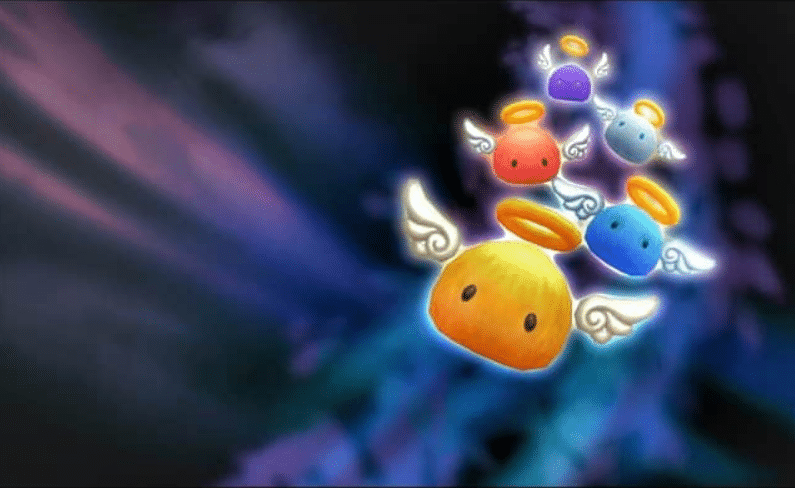
The primary purpose of the units obtained from the Rainbow Garden in Summoners War: Sky Arena is to serve as evolution material, commonly referred to within the community as “fodder.” These units, known as Rainbowmons, are specialized monsters that are not designed for combat in any capacity. They do not possess skills, elemental advantages, or team synergies. Instead, their sole and crucial function is to streamline the process of evolving other monsters within the player’s roster—a process that is central to progressing in both PvE and PvP content throughout the game.

Rainbowmons earned through the Rainbow Garden event come pre-leveled, meaning they are already at the maximum level for their star tier. For instance, a 3-star Rainbowmon from the event will arrive at level 25, the highest level for a 3-star unit. This eliminates the otherwise necessary task of leveling up regular monsters just to use them as evolution material. Ordinarily, evolving a 3-star monster to a 4-star monster requires three additional 3-star monsters, all at max level.
Without Rainbowmons, this means players would need to spend significant energy and time grinding experience stages to level up multiple units just for the sake of evolution. Rainbowmons skip this process entirely, acting as ready-to-use material and saving players substantial amounts of time, effort, and in-game resources such as energy, mana stones, and monster storage slots.
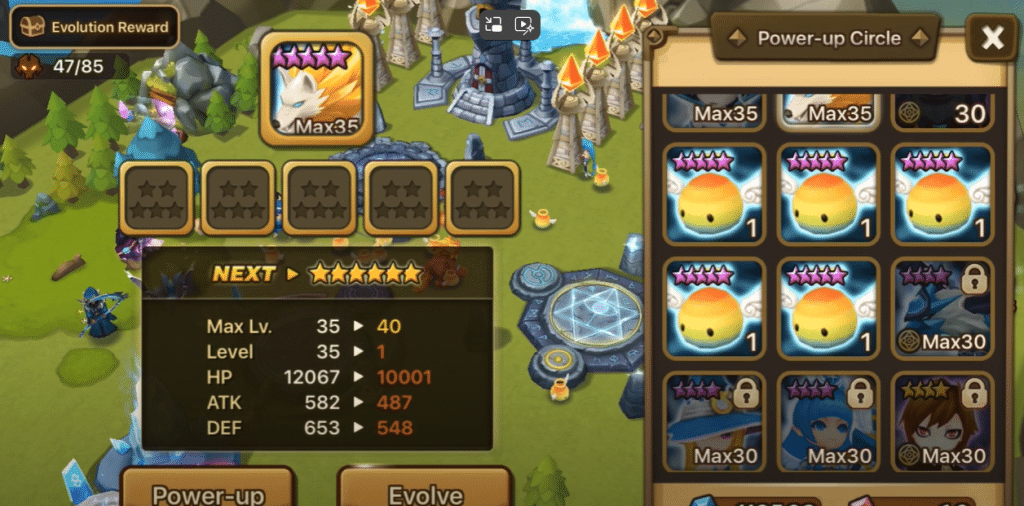
Beyond their immediate use in evolving monsters, Rainbowmons themselves can also be evolved into higher-star versions to support more advanced stages of monster development. A 3-star Rainbowmon can be evolved to 4 stars and later used in evolving 4-star monsters to 5 stars. This flexible use allows players to construct entire evolution chains using just Rainbowmons and a minimal number of additional resources. While evolving Rainbowmons does require a few other units of the same star level, it is often far more efficient than leveling up and evolving combat monsters that might be better saved for actual gameplay.

The efficiency provided by Rainbowmons becomes even more impactful when players begin working toward 6-star monsters—the highest star rating currently available in the game. Reaching 6 stars requires not only evolving a single monster five times but also gathering and evolving multiple layers of fodder monsters, each needing to be at the appropriate star level and fully leveled. This makes the process inherently grind-heavy and time-consuming. Rainbowmons, particularly the max-leveled ones obtained from the Rainbow Garden, dramatically cut down this workload by serving as plug-and-play pieces in the evolution puzzle.
Furthermore, Rainbowmons serve a strategic role in long-term game planning. Players often use downtime between major events or summoning sessions to prepare fodder monsters for future evolutions. During these preparation phases, stockpiling Rainbowmons from the Rainbow Garden provides an excellent foundation for future upgrades. The event structure of the Rainbow Garden means that players have periodic, predictable access to high-value evolution materials, which can be strategically planned around to coincide with summoning festivals, fusion projects, or guild events.

While the Rainbow Garden is a primary source for these evolution materials, 4-star Rainbowmons can also be acquired through other means, such as guild shops or special event rewards, further reinforcing their status as foundational elements of monster progression. Regardless of the acquisition method, Rainbowmons retain their identity as essential tools in the player’s progression toolkit.
In essence, the Rainbow Garden is more than just an event dungeon—it is a time-saving system embedded into the game’s broader evolution mechanics. By supplying pre-leveled, evolution-ready monsters in a structured, limited-time format, it provides all players—from early-stage beginners to late-game veterans—with a reliable, efficient, and resource-friendly way to build the strong, high-star monsters required to conquer increasingly difficult content. Leveraging the Rainbow Garden effectively is not just a matter of convenience—it’s a strategic advantage that accelerates every aspect of team growth and account progression.
Rainbow Garden Battle Mechanics
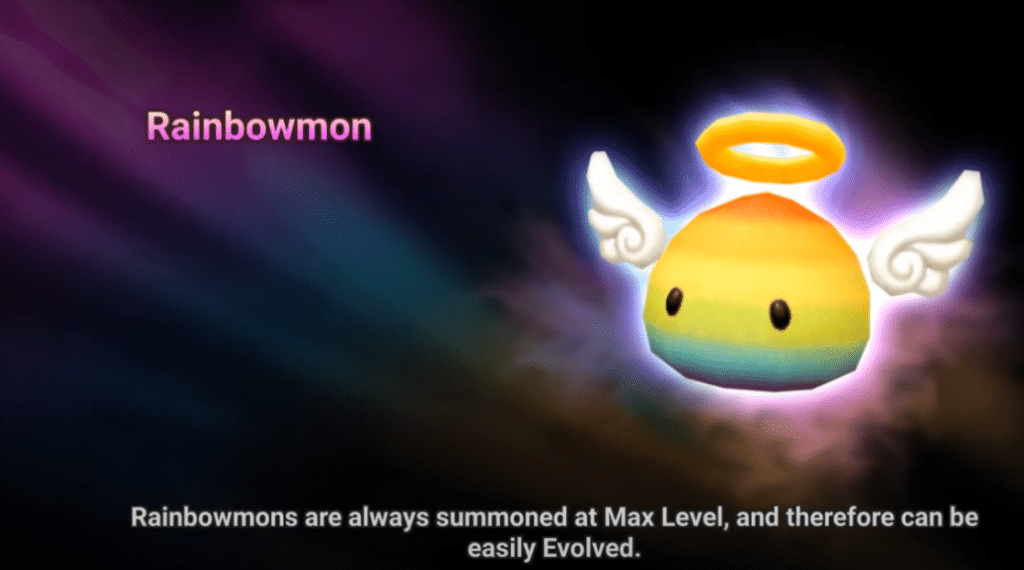
The Rainbow Garden in Summoners War: Sky Arena features simple and accessible battle mechanics tailored to its role as a support dungeon for monster evolution. Unlike more challenging dungeons such as those in Cairos or Rift areas, Rainbow Garden battles are designed to be beginner-friendly and require minimal strategy, making them suitable for players at nearly any progression level.
Each run of the Rainbow Garden consists of a series of standard battle waves, typically three, culminating in a boss stage. The enemies encountered are mostly low-difficulty monsters, often featuring various elemental types but lacking complex skills or high damage output. The boss, which may be a larger or higher-level variant of a basic monster, generally has no advanced mechanics such as counterattacks, immunity phases, or AoE burst damage, ensuring a smooth and straightforward clearing process.

The dungeon’s structure emphasizes speed and consistency. Most players can auto-battle the stages with basic farming teams or even lower-star monsters. Because the purpose of the dungeon is not to challenge players but to serve as a resource outlet, the battle mechanics are deliberately simple, allowing for rapid and repeated clears during the event period.
Victory rewards typically include 3-star Rainbowmons, and sometimes 2-star versions on lower stages. These units are granted directly upon clearing the stage, without relying on random drops. Since the Rainbowmons are pre-leveled to their maximum for their star tier, no additional experience farming is needed, further reducing the effort required from players.

In essence, Rainbow Garden battle mechanics are intentionally light and repetitive, focused on accessibility and efficiency. The goal is to provide a reliable method for obtaining evolution materials rather than offering a tactical challenge, making it a key resource dungeon during its event windows.
Conclusion
The Rainbow Garden is an event-specific feature in Summoners War: Sky Arena that offers players a focused opportunity to acquire 3-star Rainbowmons, which are critical resources in the monster evolution process. Unlike standard monsters used in combat, Rainbowmons are specially designated as evolution material—commonly referred to as “fodder”—and are not intended for battle. Their primary role is to support the game’s progression system by making it easier and more efficient for players to evolve their monsters to higher star levels, which is essential for unlocking stronger stats, better skills, and access to advanced content.
What sets Rainbowmons apart is that they are automatically leveled to the maximum level for their current star tier upon acquisition. This means that a 3-star Rainbowmon obtained from the Rainbow Garden is immediately ready to be used as one of the three required materials needed to evolve a 3-star monster into a 4-star monster, bypassing the often time-consuming process of leveling up normal monsters just for evolution purposes. This significantly reduces the amount of energy, experience, and time that players would otherwise need to invest in leveling fodder monsters through scenario grinding or other less efficient means.
The Rainbow Garden itself is only accessible during specific in-game events, usually recurring on a monthly basis or tied to special promotions and seasonal celebrations. During its active period, players can enter the dungeon and clear its stages to earn Rainbowmons as guaranteed rewards. The battles within the dungeon are intentionally simple and accessible, allowing even newer players or those with underdeveloped teams to participate and reap the benefits. The dungeon may offer Rainbowmons of different star levels depending on the difficulty of the stage, but 3-star Rainbowmons are typically the highlight due to their optimal use in evolution chains.
In the long-term progression of a player’s account, Rainbowmons play a crucial role in building high-star monsters, including 5-star and 6-star units. These evolved monsters are vital for tackling late-game content such as the higher floors of Cairos Dungeon, Rift Beasts, PvP arenas, and guild battles. Since evolving a monster from 3 stars to 6 stars involves a considerable number of other monsters as materials—many of which must be max-leveled—the availability of pre-leveled Rainbowmons directly supports a smoother and less grind-heavy progression curve.
Overall, the Rainbow Garden is a highly efficient, player-friendly event dungeon that serves a specific but vital purpose in the game’s development cycle. Taking full advantage of this event is strongly encouraged for players of all levels, as it provides a time-saving method to gather evolution materials, reduce resource expenditure, and accelerate the creation of competitive, high-level teams.
